

Table of Contents
ToggleSpecialized Outpatient Detox for Kratom Dependence
Kratom is often marketed as a “natural” alternative for pain, energy, or mood support. But many who use it daily discover how quickly dependence can develop. Stopping kratom suddenly can cause uncomfortable withdrawal symptoms such as anxiety, irritability, insomnia, body aches, and strong cravings.
Because few programs specialize in kratom detox, many people feel they have nowhere to turn for help. If you’re searching for outpatient detox near me, our outpatient kratom detox program provides a safe, discreet, and medically supervised solution. As one of the only specialized detox programs in North Carolina, we offer individualized protocols that address both the physical and psychological challenges of kratom withdrawal. Clients receive daily monitoring and support from our experienced medical and clinical team, allowing them to detox without leaving their responsibilities at home or work.
How Our Kratom Detox Works
Kratom detox at our facility follows a structured, medically supervised process designed to keep clients safe and comfortable at every stage:
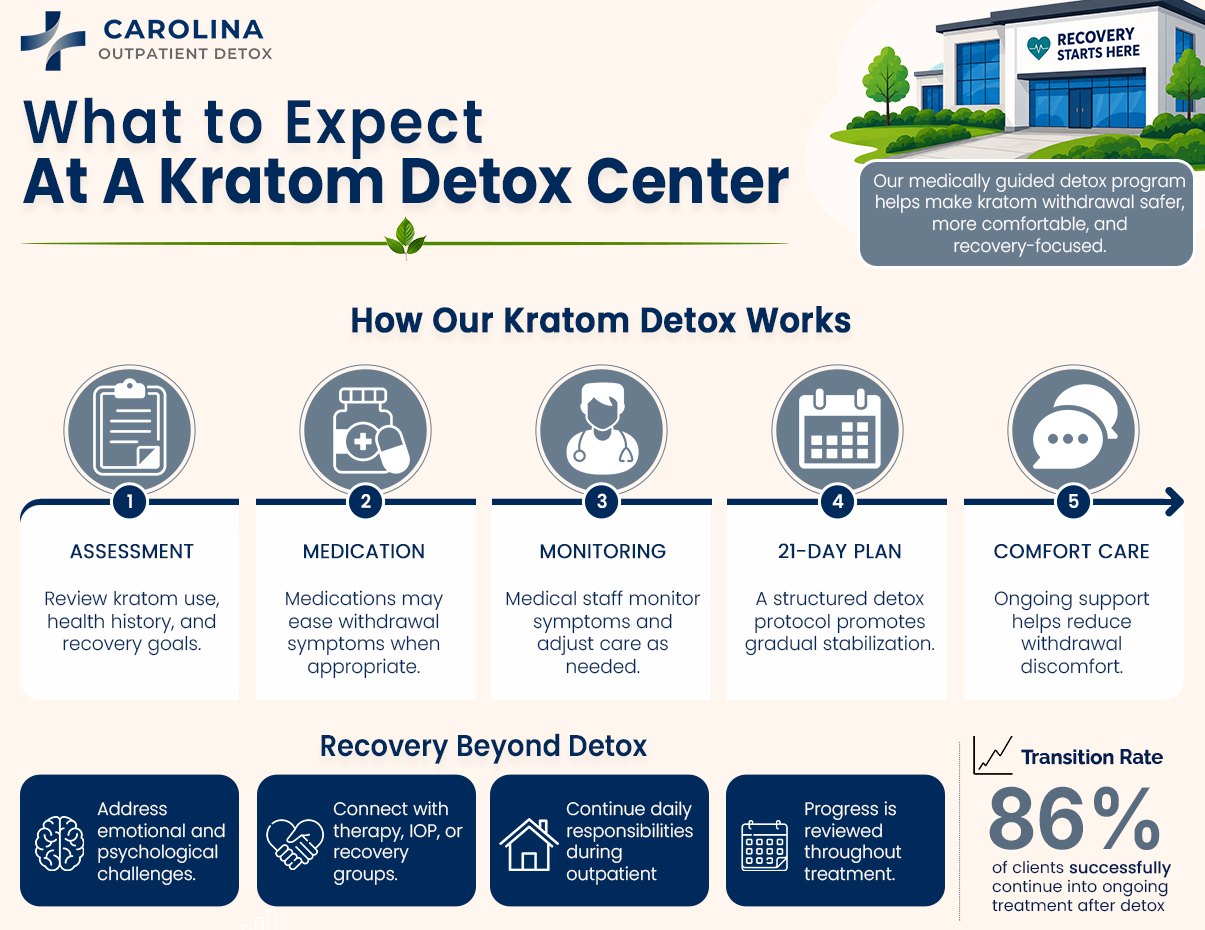
Confidential Assessment
Every client begins with a private consultation to evaluate kratom use, screen for other drugs and any substance-related history, and clarify personal recovery goals so healthcare providers can guide safe care.
Medication-Assisted Support for Kratom Withdrawal
When clinically appropriate, medications are used to ease withdrawal discomfort and stabilize mood and sleep, and treatment may be adjusted based on the severity and duration of symptoms. During kratom detox, tapering can reduce withdrawal severity instead of stopping abruptly.
Daily Monitoring of Withdrawal Symptoms
Our nursing and medical staff track progress closely, watching not only physical withdrawal symptoms but also cognitive changes such as difficulty concentrating and memory problems. Throughout kratom detox, healthcare professionals monitor patients closely to keep symptoms manageable and support safety.
21-Day Detox Protocol
We structure detox over 21 days to allow for a gradual, more comfortable stabilization process, giving the brain more time to adjust and helping support brain chemistry during detox. Some people also continue to experience withdrawal symptoms for weeks to months after the initial phase improves.
Transition into Aftercare and Post Acute Withdrawal Syndrome Support
We help clients move seamlessly into supportive therapy, intensive outpatient treatment, or recovery groups for long-term success. Continuing care is especially important for people recovering from addiction or a substance use disorder, because symptoms and relapse risk can persist after detox.

Why Choose Outpatient Kratom Detox
Kratom is often misunderstood as a low-risk supplement, but finding the right level of care matters just as much as it does for any other substance dependence. Our outpatient program is built specifically around the realities of kratom withdrawal, so clients get specialized, physician-led care without stepping away from work, family, or daily life. Here’s what sets our program apart:
- One of the only specialized outpatient kratom detox programs in North Carolina, addressing kratom as a drug often sold as a dietary supplement that can still lead to dependence and abuse
-
Same-day admissions available seven days a week
- Complete privacy and discretion for professionals and high-functioning adults
- Works with most major insurance providers
- Safe, effective protocols overseen by a board-certified physician, especially because kratom affects some of the same receptors involved in opioid and other addictive substances
This clinical overlap is one reason care may resemble approaches used for opioid withdrawal or opioid use disorder.
Is Outpatient Kratom Detox Right for You?
This program is ideal if you:
- Use kratom daily, need higher doses, or notice withdrawal symptoms within a day of stopping
- Have attempted to quit on your own but found the process overwhelming
- Need confidentiality and cannot step away from work or family for inpatient treatment
- Want a medically supported plan that increases comfort and reduces relapse risk when several factors make withdrawal harder or raise the chance of relapse
Withdrawal symptoms can last up to a week for some users, so a supportive environment and medical guidance can make the process safer and more manageable.
Take the First Step Today
FAQs About Kratom Detox
Is kratom a dangerous drug?
Kratom has the potential to be very dangerous if it is misused, if someone becomes physically dependent, or if there is contamination of the kratom itself. Seeking help early in the development of an addiction is very important to prevent severe and lasting damage to the person’s life.
Can you overdose on kratom?
Yes, it is possible to overdose on kratom. It also has the potential to interact with other substances, possibly leading to overdose or unexpected effects.
How long does it take to detox from kratom addiction?
Carolina Outpatient Detox offers 21-day detox protocols designed to help individuals detox from kratom (and other substances) safely. But the exact length of detox, including how long it takes to “feel better” after the process completes, is highly dependent on the health of the individual person.
Is kratom as dangerous as other drugs?
Data is still being collected on how much harm kratom has caused compared to other substances. This is especially true for cases where a person has overdosed on multiple substances that include kratom. But while the extent of harm is still being assessed, it’s important to know that kratom affects the body in ways similar to other addictive substances and it can have effects on the body over time.
Is kratom detox covered by health insurance?
Most detox services are covered by health insurance to some extent, but coverage can vary according to provider and plan. It’s advised that people looking into kratom detox verify insurance coverage before officially starting services.

Dr. Brady Schroer obtained his Bachelor of Science degree in Biopsychology with an emphasis in Chemistry. He then attended Medical School at the Kansas City University of Medicine and Biosciences. After completing medical school, Dr. Schroer completed his general psychiatry residency at a nationally known treatment facility, the Menninger Clinic. Immediately after residency, Dr. Schroer worked in a large medical hospital system caring for geriatric clients, adult inpatient clients, completing consultation liaison evaluations on the medical floors, conducting Electroconvulsive Treatment for clients with severe/refractory depression, and caring for complicated delirium patients in the ICU. During this time, He served as Medical Director and Chief of Psychiatry before moving to Western North Carolina.