

Table of Contents
ToggleAlcohol Detox in North Carolina Without Putting Your Life on Hold
Alcohol use disorder is one of the most common substance use disorders in North Carolina and across the United States. Many individuals struggling with alcohol addiction want help but hesitate to seek treatment because they cannot step away from work, family, or professional responsibilities.
Our outpatient alcohol detox program in Charlotte, North Carolina, offers a safe, confidential, and medically supervised alternative to inpatient rehab for people who need medical detox care without putting daily life on hold in Charlotte NC. You receive expert detox treatment while remaining connected to your daily life, all within a supportive and discreet treatment center designed for professionals and high-functioning adults.
Understanding Alcohol Addiction and Substance Use Disorders
Alcohol addiction is a chronic medical condition that affects both physical health and mental health. Over time, repeated substance use changes brain chemistry, and structured addiction treatment helps people who are physically dependent on alcohol stop safely.
Many individuals struggling with alcohol dependency also experience co-occurring mental health disorders such as anxiety, depression, or trauma-related conditions. Effective alcohol addiction treatment must address both substance use and mental health, while also addressing the root causes of addiction, to support long-term recovery.
Does Alcohol Detox Require Medical Supervision?

Yes, medical supervision is recommended for alcohol detox. Alcohol withdrawal symptoms can range from mild discomfort to life-threatening complications. Attempting to detox without professional oversight makes it harder to manage withdrawal symptoms safely and increases the risk of serious medical emergencies.
Common Alcohol Withdrawal Symptoms
Common withdrawal symptoms include:
- Anxiety and panic
- Insomnia and fatigue
- Nausea and vomiting
- Sweating and tremors
- Elevated heart rate and blood pressure
Severe Withdrawal Risks
Without proper detox treatment, withdrawal symptoms may escalate to:
- Seizures
- Hallucinations
- Delirium tremens (DTs)
Medically supervised alcohol detox dramatically reduces these risks and ensures safety throughout the detox process.

Our Alcohol Detox Treatment Approach
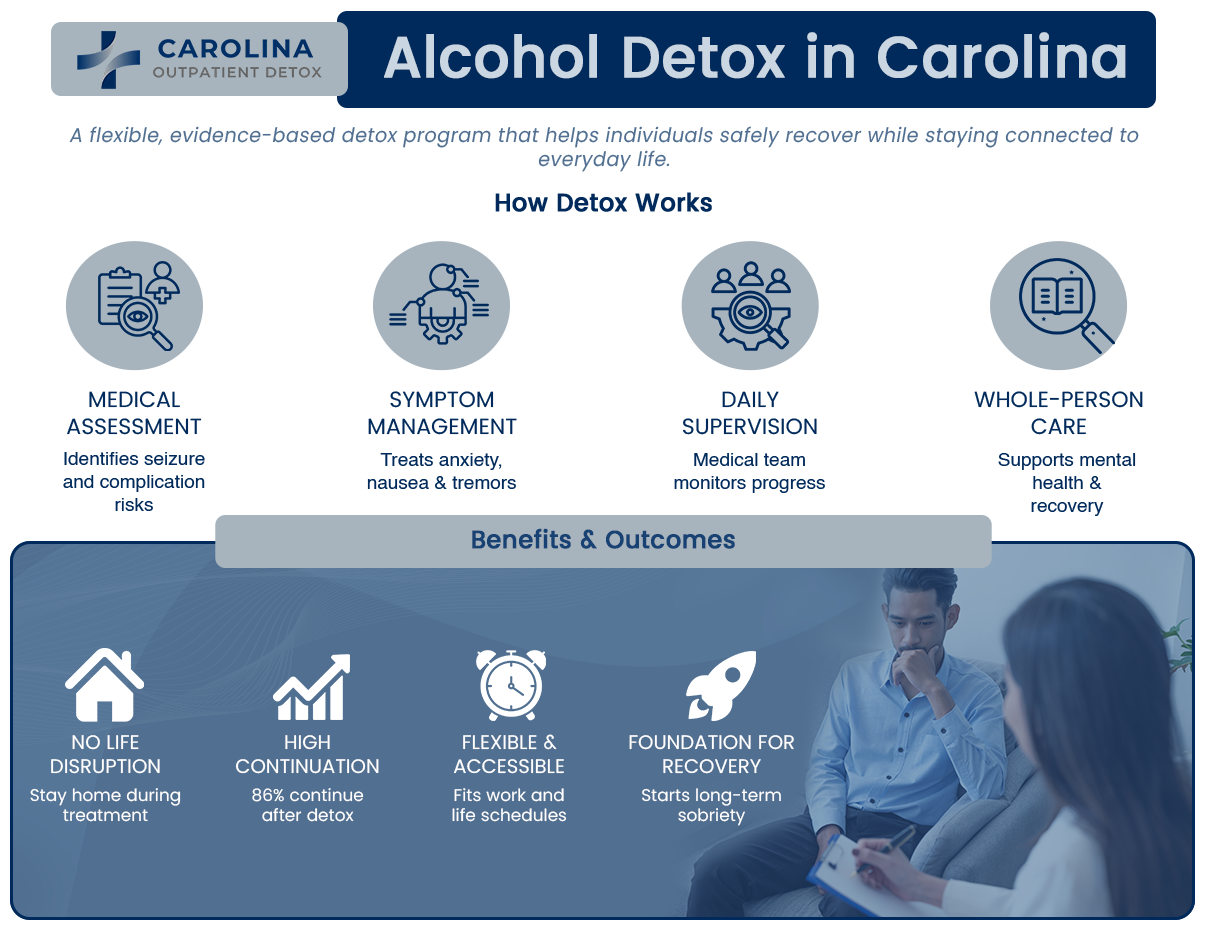
Our alcohol detox program follows evidence-based care and ASAM 1.7 guidelines, offering structured outpatient programs that prioritize safety, comfort, dignity, and quality care as part of a broader alcohol rehab continuum.
Comprehensive Medical Assessment
Each client begins with a confidential evaluation and medical evaluation that reviews:
- Substance use history
- Physical health
- Mental health conditions
- Risk factors for severe withdrawal
This allows our medical staff to tailor treatment based on each person’s addiction and health needs.
Daily Medical Monitoring and Clinical Oversight
Our experienced medical team provides daily monitoring to ensure withdrawal symptoms are managed safely. Treatment plans are adjusted as needed to support stabilization and healing.
Led by Dr. Christopher Lord, our board-certified Medical Director, the program emphasizes clinical excellence, compassionate care, and medical accountability.
Medication-Assisted Treatment for Alcohol Detox
When clinically appropriate, medication-assisted treatment (MAT) may be used to:
- Reduce withdrawal symptoms
- Lower seizure risk
- Promote physical and emotional stability
All medications are prescribed and monitored by qualified medical professionals within a structured detox services framework.
21-Day Outpatient Alcohol Detox Protocols
Our outpatient detox services are delivered through structured 21-day protocols, allowing the body and nervous system time to stabilize.
This timeline supports:
- Gradual physical recovery
- Improved sleep and appetite
- Reduced cravings
- Emotional regulation
Unlike rushed detox models, our approach prioritizes sustainable progress and readiness for the next phase of the recovery process.
Transitioning From Detox to Ongoing Addiction Treatment
Detox is only the first step in treating addiction. Long-term sobriety requires continued support to build long term stability. Aftercare planning is designed to prevent gaps between primary treatment and recovery support, and alumni programs offer ongoing support and community connections.
Aftercare Planning and Treatment Options
Before completing detox, our admissions team and clinical staff help coordinate next-step treatment services, including outpatient treatment, which may include:
- Intensive outpatient program
- Individual counseling
- Group therapy
- Support groups
- Mental health treatment
Some clients may also transition into partial hospitalization or a partial hospitalization program before moving into lower-intensity outpatient care. Many of our clients successfully transition into ongoing addiction treatment or recovery center programs.
Benefits of Outpatient Alcohol Detox in Charlotte, North Carolina
Maintain Work and Family Responsibilities
Outpatient programs allow you to receive treatment without leaving your job, family responsibilities, or daily obligations.
Discreet and Confidential Treatment
Our treatment center is designed for privacy, making it ideal for executives, professionals, and individuals seeking discretion.
Same-Day Admissions
We offer same-day admissions, including weekends and holidays, to support individuals seeking treatment when they are ready.
Insurance Coverage and Financial Transparency
We work with most major insurance providers and provide clear financial details regarding coverage and out-of-pocket expenses, making addiction treatment accessible with straightforward insurance guidance and clarity at every step. If you are unsure if we work with your provider, speak to our admissions team. They can help verify benefits and explain treatment costs.
Alcohol Detox vs. Inpatient Rehab
Understanding the difference between alcohol detox and inpatient rehab is essential when choosing the right level of care. While both are critical components of the recovery journey, they serve distinct purposes; detox focuses on safely managing withdrawal, while inpatient rehab provides the therapeutic structure needed for lasting change.
Outpatient Detox
Outpatient detox allows individuals to withdraw from alcohol safely while continuing to live at home, making it a practical option for those with stable living environments and strong support systems. Key features include:
- Live at home
- Daily medical oversight
- Flexible scheduling
- Ideal for high-functioning adults
Inpatient Rehab or Residential Treatment
Inpatient rehab, also known as residential treatment, provides 24/7 care in a structured environment designed to support both withdrawal management and intensive therapeutic work. Key features include:
- 24/7 supervision
- Structured environment
- Removal from daily stressors
Some individuals may need residential care before stepping down to outpatient services.
Both options play important roles in addiction treatment. Our goal is to guide each individual toward the most appropriate level of care.
Treating Alcohol and Drug Addiction Together
Many individuals struggle with drug and alcohol addiction simultaneously, and rising drug use trends reflect a broader substance abuse crisis alongside alcohol dependence. Our treatment services can address:
Treating addiction comprehensively improves outcomes and supports lasting recovery, and some clients need integrated detox and treatment planning for opioid use disorder.
Mental Health Support During Alcohol Detox
Mental health is a core component of the recovery process. Untreated mental health disorders can increase relapse risk.
Our treatment approach integrates:
- Mental health assessments
- Individual counseling referrals, including evidence-based therapies like cognitive behavioral therapy (CBT)
- Coordination with the mental health services administration when appropriate
This holistic approach supports long-term recovery and emotional resilience.
Evidence-Based Care in the Addiction Treatment Space
Our program is grounded in evidence-based treatment standards recognized across the addiction treatment space. We emphasize:
- Medical safety
- Individualized care
- Motivational interviewing as a non-judgmental, evidence-based counseling approach that helps clients explore goals, work through ambivalence, and build confidence for change
- Clear treatment planning
We believe effective treatment honors each person’s unique story while following proven clinical protocols.
Supporting Loved Ones and Families
Alcohol addiction affects more than the individual. It impacts every loved one involved, and active family involvement can make a meaningful difference in recovery. When appropriate, we help connect family members with education, community resources, support services, and family therapy through available programs or referral options.
Healing the family system is often an important part of the long-term recovery journey.
Why Choose Our Charlotte Recovery Center
Outpatient Detox in North Carolina is the only standalone detox facility in North Carolina. We serve high-functioning adults who cannot step away from their responsibilities for weeks at a time. At our Charlotte location, you can expect:
- Experienced medical staff
- Board-certified medical leadership
- Discreet outpatient rehab model
- Strong aftercare outcomes
- Supportive environment focused on dignity and respect
We are not just another treatment center; we are a recovery center focused on inspiring recovery and long-term sobriety.
Begin Your Recovery Journey Today
You do not need to wait for things to get worse to seek help. Alcohol detox can be the turning point toward improved health, stability, and long-term sobriety.
If you or someone you love is struggling with alcohol or substance use, contact our caring team today to help you begin the healing process.
FAQs About Alcohol Detox in North Carolina
Does withdrawal from alcohol addiction hurt?
Withdrawals from alcohol use are highly variable, and can depend on the person’s individual health and their history of substance use. Alcohol interacts with and suppresses the central nervous system, so there is potential discomfort when the system re-regulates without the presence of alcohol.
Do private insurance plans cover alcohol detox in North Carolina?
Most insurance providers offer coverage for alcohol detox and other addiction treatment programs. But coverage can vary by treatment plan and individual provider, and the extent of care can vary. It’s advised that individuals seeking help for alcohol detox verify insurance coverage before entering a treatment program, to ensure that they’re aware of the extent of their coverage.
Is medication-assisted treatment (MAT) standard for alcohol detox?
The use of medications during detox treatment highly depends on individual needs. MAT can be a highly useful tool in providing comfort for those experiencing withdrawals from alcohol use.
When is drinking bad enough to need alcohol detox and rehab?
People that find their drinking takes up most of their time and money, who find themselves lying to others about how much alcohol they drink, and who have failed at quitting drinking in the past have a high chance of benefitting from alcohol detox and rehab for addiction. If people in a person’s life express concern about their drinking, it may be time to seek help.
How long does it take to detox from alcohol?
The length of alcohol detox depends highly on a person’s individual health and personal needs. At Carolina Outpatient, our 21-day outpatient detox protocols are designed to facilitate steady detoxification while allowing the individual to still attend to their personal affairs. Successful recovery depends on completing detox and following through with recommended next-step care.
Contact Our Admissions Team
Carolina Outpatient Detox – Charlotte, North Carolina
Confidential. Compassionate. Evidence-based alcohol detox services designed for real life.
Take the First Step Today

Dr. Brady Schroer obtained his Bachelor of Science degree in Biopsychology with an emphasis in Chemistry. He then attended Medical School at the Kansas City University of Medicine and Biosciences. After completing medical school, Dr. Schroer completed his general psychiatry residency at a nationally known treatment facility, the Menninger Clinic. Immediately after residency, Dr. Schroer worked in a large medical hospital system caring for geriatric clients, adult inpatient clients, completing consultation liaison evaluations on the medical floors, conducting Electroconvulsive Treatment for clients with severe/refractory depression, and caring for complicated delirium patients in the ICU. During this time, He served as Medical Director and Chief of Psychiatry before moving to Western North Carolina.