
Benzodiazepines are a class of medications commonly used to treat anxiety and sleep disorders. While effective in the short term, long-term use can lead to physical dependence. This can make stopping difficult without professional help.
Attempting to quit without medical guidance can lead to severe withdrawal symptoms. These symptoms can sometimes be dangerous. Understanding the benzodiazepine detox process is the first step toward safe recovery. Medically supervised detox programs can provide a safe path forward. Carolina Outpatient Detox offers specialized care for individuals seeking discreet treatment options.
Benzodiazepine detox at Carolina Outpatient Detox is medically supervised and delivered on an outpatient basis at our state-licensed, Joint Commission-accredited clinics. Our medical team screens for withdrawal severity at intake. Anyone who needs round-the-clock monitoring is referred to inpatient care.
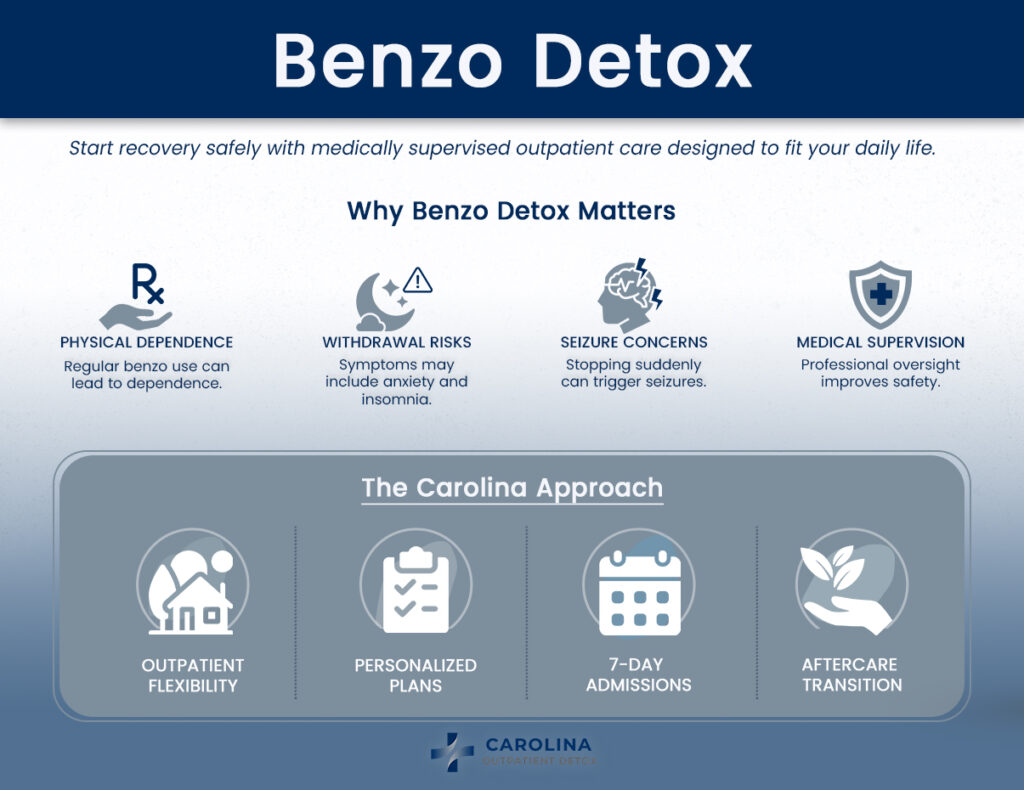
Table of Contents
ToggleWhat is Benzo Detox?
Benzo detox is the medically supervised process of safely discontinuing benzodiazepine medications. Medical detox includes monitoring benzo withdrawal symptoms and prevents life-threatening complications. This process uses a gradual tapering approach instead of abrupt cessation.
Stopping benzodiazepines suddenly can trigger severe withdrawal symptoms. These include seizures, psychosis, and cardiovascular issues. Benzodiazepines are often tapered down to a longer-acting benzodiazepine to make withdrawal smoother and more manageable.
Medical supervision is essential throughout benzo detox. Benzodiazepine withdrawal syndrome can be unpredictable and potentially fatal without proper clinical oversight. A medically supervised detox can ensure a safe recovery from benzodiazepine withdrawal.
Benzodiazepine Withdrawal Symptoms and Timeline
Understanding benzodiazepine withdrawal symptoms helps you prepare for the recovery process ahead. Withdrawal symptoms can vary significantly based on several factors, including the specific benzodiazepine used, dosage, duration of use, and the degree of drug use. Individual factors such as family history and methods of ingestion can also influence the severity of withdrawal symptoms.
Common Benzodiazepine Withdrawal Symptoms
Side effects from benzo detox can range from mild to severe and require medical supervision. Physical symptoms of benzodiazepine withdrawal include:
- Muscle cramps and tension
- Tremors and shaking
- Sweating and hot flashes
- Nausea and vomiting
- Headaches
- Dizziness and balance problems
- Heart palpitations
- Weight loss
- Seizures (in severe cases)
Psychological symptoms of benzodiazepine withdrawal include:
- Severe anxiety and panic attacks
- Insomnia and sleep disturbances
- Irritability and mood swings
- Depression
- Confusion and memory problems
- Hallucinations (in severe cases)
- Depersonalization (feeling detached from oneself)
- Derealization (feeling that surroundings are not real)
Withdrawal Timeline
Phase | Timeframe | Symptoms |
Onset | First few hours to 2 days
| Early withdrawal symptoms, such as initial anxiety, insomnia
|
Peak | 1-2 weeks | Most withdrawal symptoms are at their worst, including serious withdrawal symptoms
|
Acute | 2-4 weeks | Gradual reduction of most withdrawal symptoms
|
Protracted Withdrawal | Months to years (if not professionally addressed) | Symptoms fluctuate and may include prolonged anxiety, insomnia, cognitive deficits, depression, and mood swings that can appear randomly and without warning
|
Short-acting benzos like Xanax (alprazolam) typically cause people to experience withdrawal symptoms sooner, with withdrawal symptoms starting within 6-24 hours after the last dose. Long-acting benzos like Valium may not produce symptoms for 2-17 days after stopping use. Most benzodiazepine withdrawal symptoms peak within the first one to two weeks, particularly with short-acting medications. Withdrawal from long-acting benzos often develops more gradually and may last longer, though the acute phase is sometimes less intense.

Risks of Unsupervised Benzo Withdrawal
Attempting benzo withdrawal without medical supervision poses serious health risks, including the potential for serious withdrawal symptoms. Severe symptoms can develop rapidly and may become life-threatening without proper medical intervention.
Critical risks can include:
- Seizures: Individuals stopping high-dose, long-term benzodiazepine use may experience seizures.
- Psychosis and hallucinations: Individuals may experience hallucinations and psychosis during acute withdrawal phases.
- Cardiovascular complications: This includes dangerous blood pressure fluctuations.
- Delirium tremens: This is a potentially fatal condition that requires immediate medical attention.
- Suicide risk: Severe depression and anxiety during withdrawal increase suicide risk
Benzodiazepine withdrawal can be dangerous and even deadly, which is why stopping cold turkey without medical assistance is not recommended. Individuals with a history of benzo abuse, especially those who have taken higher doses or used benzodiazepines chronically, are at a higher risk of experiencing uncomfortable withdrawal symptoms and other dangerous complications. Medical detox provides continuous monitoring and medication management. It offers immediate intervention if complications arise. The tapering process under medical supervision can significantly reduce these risks.
Safe, Medically Supervised Benzodiazepine Detox in Charlotte
Benzodiazepines such as Klonopin (clonazepam), Xanax, and Valium are commonly prescribed for anxiety, stress, and sleep disorders. When used long-term or at higher doses, they can lead to physical dependence. This makes stopping difficult and dangerous without medical oversight.
At our North Carolina locations, we offer various levels of benzodiazepine withdrawal care. Clients receive personalized tapering protocols developed under ASAM 2.7 standards. These are supervised by Dr. Brady Schroer, our board-certified Medical Director. With daily monitoring, professional nursing support, and compassionate care, our outpatient treatment center helps clients detox safely while maintaining their responsibilities at work and home.
What to Expect During Detox
What to Expect During Benzo Detox at Carolina Outpatient Detox
At Carolina Outpatient Detox, you’ll know what to expect at every step, from your first phone call through your transition into ongoing care.
- A Confidential First Call: Your benzo detox begins with a confidential call to our admissions team. We’ll listen to your needs, explain how outpatient benzo detox works, and answer your questions without judgment.
- Insurance Verification: Our team works directly with your insurance provider to confirm benefits and secure any required authorizations, so you can start treatment without financial surprises or unnecessary delays.
- Same-Day Admission: When you’re ready, you can begin detox the same day you call. We’re open seven days a week, including weekends and holidays.
- Your First Visit and Evaluation: On your first day, you’ll complete a thorough medical and psychiatric evaluation. Our team uses this assessment, including your benzodiazepine type, dose, and history of use, to design an individualized tapering plan.
- Daily Monitoring and Tapering Adjustments: You’ll return to the clinic each day for medical monitoring, therapeutic support, and adjustments to your taper. Our nurses, clinicians, and physicians track your progress daily, so you stay safely supported while living at home and keeping up with work and family.
- Preparing for Life After Detox: Detox is the first step in recovery. We coordinate with outpatient programs, therapists, and recovery resources to build your aftercare plan before detox ends. Eighty-six percent of our clients successfully transition into ongoing care after detox.
Tapering follows established, evidence-based protocols. Depending on your needs, your physician may transition you from a short-acting benzodiazepine to a longer-acting one, such as diazepam (Valium) or chlordiazepoxide (Librium), for a smoother, more gradual withdrawal.

Why Outpatient Benzodiazepine Detox in Charlotte, NC?
Outpatient benzodiazepine detox offers several advantages for working professionals. It provides medical supervision while maintaining personal and professional responsibilities.
- Confidential care tailored for professionals and high-functioning adults
- Same-day admissions available seven days a week
- Accepted by most insurance providers, with help in obtaining prior authorizations when required
- Avoids the disruption of inpatient treatment
- Provides continuity, allowing clients to remain present with family and work commitments
How Outpatient Detox Compares to Inpatient Detox
The main difference between outpatient and inpatient detox is where you stay during treatment. Inpatient detox requires living at a facility with 24/7 medical oversight, which means taking time away from work and family. With outpatient detox at Carolina Outpatient Detox, you visit the clinic daily for medical monitoring, tapering adjustments, and therapeutic support, then return home each day. Outpatient care also tends to cost less and lets you keep your normal routine.
Outpatient detox is generally best for people with mild to moderate withdrawal risk and a stable home environment. Inpatient care may be the safer choice for anyone with a history of seizures, severe withdrawal risk, dependence on multiple substances, or an unsupportive living situation. During your first-day evaluation, our medical team will help you decide which level of care is right for you.
Is Outpatient Detox Right for You?
An outpatient detox program is designed to serve the needs of individuals who:
- Have developed dependence on benzodiazepines (such as Xanax or Ativan)
- Cannot leave work, family, or personal commitments for inpatient treatment
- Need privacy and discretion throughout the recovery process

Insurance Coverage for Outpatient Benzo Detox
Most major insurance plans recognize outpatient benzo detox as medically necessary. They provide coverage for evidence-based treatment programs. Understanding insurance coverage helps you plan for treatment without financial barriers.
Insurance Verification Process
Carolina Outpatient Detox works with most major insurance providers to minimize out-of-pocket costs. Follow these steps to verify your insurance:
- Contact your insurance provider to verify outpatient detox benefits.
- Obtain prior authorization if required by your plan.
- Understand your deductible and out-of-pocket maximums.
- Review the in-network vs. out-of-network coverage differences.
- Ask about coverage limits for detox duration and services.
Our admissions team can assist with insurance verification and can help obtain prior authorizations when required.
Aftercare, Support Groups, and Long-Term Recovery
Successful benzo detox is just the beginning of the recovery journey. Aftercare and ongoing support are essential for maintaining sobriety, managing drug cravings, preventing relapse, and building a stronger foundation for addiction recovery.
Learning healthy ways to cope with triggers and cravings is a key part of aftercare and long-term recovery. Therapy and counseling are also important for supporting mental health and managing protracted withdrawal symptoms that may persist after detox.
Comprehensive Aftercare Services
Our aftercare programs include:
- Individual therapy: Addresses underlying anxiety and trauma
- Cognitive behavioral therapy (CBT): Teaches healthy coping strategies
- Dialectical behavior therapy (DBT): Manages emotions and stress
- Mindfulness and meditation: Reduces anxiety without medication
- Nutritional counseling: Supports physical recovery
- Family therapy: Rebuilds relationships and communication
Relapse Prevention Strategies
Relapse prevention strategies help individuals maintain their sobriety after completing detox.
- Identify triggers: Recognize situations that increase relapse risk and help you break free from repeated benzodiazepine use.
- Develop coping skills: Find healthy alternatives to benzodiazepine use that reduce the urge to return to abusing benzodiazepines for relief, especially when relapse risk rises from trying to recreate prior desired effects.
- Build support networks: Maintain connections with the recovery community.
- Manage anxiety naturally: Learn non-medication approaches to anxiety management.
- Regular check-ins: Keep ongoing contact with treatment providers.
Take the First Step Toward Freedom From Addiction Today
You do not need to put your life on pause to get help. Carolina Outpatient Detox provides the safety, expertise, and discretion you deserve. If you are struggling with alcohol, benzodiazepines, opioids, kratom, stimulants, or multiple substances, contact our team today to help you begin recovery.
We understand how challenging this journey can be. You don’t have to face benzodiazepine withdrawal alone. Reaching out for professional benzo detox support is a sign of strength.
Frequently Asked Questions About Benzodiazepine Detox
How long does benzodiazepine withdrawal last?
Benzodiazepine withdrawal symptoms usually begin within a few hours to a few days, peak in 1–2 weeks, and may last several weeks. Protracted withdrawal symptoms can persist for months.
What is rebound anxiety after stopping benzodiazepines?
Rebound anxiety is a temporary increase in anxiety symptoms that can occur shortly after stopping benzodiazepines, often more intense than before starting the medication.
How is benzo detox managed medically?
Benzo detox is managed with a gradual tapering process under medical supervision, often using long-acting benzodiazepines to reduce withdrawal severity.
Can I work during outpatient benzo detox?
Yes, outpatient benzo detox is designed for professionals and high-functioning individuals who wish to maintain work and family responsibilities during treatment.
What are the risks of unsupervised (cold turkey) benzo withdrawal?
Unsupervised or cold-turkey benzo withdrawal can lead to serious complications, including seizures, psychosis, and increased risk of mortality. It can also worsen benzodiazepine abuse by reinforcing the cycle of using again to escape severe withdrawal symptoms.
References
https://library.samhsa.gov/sites/default/files/sma10-4554.pdf
https://www.asam.org/quality-care/clinical-guidelines/benzodiazepine-tapering
https://pmc.ncbi.nlm.nih.gov/articles/PMC4657308/
https://www.ncbi.nlm.nih.gov/books/NBK310652/
https://www.ncbi.nlm.nih.gov/books/NBK470159/
https://pubmed.ncbi.nlm.nih.gov/7841856/

Dr. Brady Schroer, DO, is the Medical Director at Carolina Outpatient Detox. He is double board-certified in General Psychiatry and Addiction Medicine and has more than 25 years of experience across detox, residential, outpatient, and hospital settings. A Menninger Clinic–trained psychiatrist, he previously served seven years as Medical Director and Chief of Psychiatry at a leading Western North Carolina hospital, where he helped build a new detox unit.