
Cocaine detox is the essential first step for anyone seeking to break free from cocaine addiction. This process involves safely eliminating cocaine from the body while managing the intense psychological and physical symptoms that can occur. Cocaine addiction can quickly impact mental clarity, emotional stability, and physical health. For professionals and high-functioning individuals, privacy, discretion, and minimal disruption to daily life are especially important.
Carolina Outpatient Detox specializes in outpatient, medically supervised cocaine detox programs tailored for those who value confidentiality and require flexible care. With expert medical oversight and individualized treatment plans, clients can begin their recovery journey safely while maintaining work and personal responsibilities. Learn more about our detox programs and how we support your recovery.
Table of Contents
ToggleCocaine Detox and Its Importance
Cocaine is a powerful stimulant that can rapidly lead to dependence. Regular use alters the brain’s reward system, making it difficult to feel pleasure without the drug. Over time, individuals may need more cocaine to achieve the same effects, creating a cycle that is hard to break without help.
Dependence on cocaine is both physical and psychological. Cravings can be overwhelming, making it challenging to stop even when someone wants to. Recognizing the signs of addiction early is crucial for effective intervention and recovery.
Cocaine use affects nearly every system in the body. Mentally, it can cause anxiety, paranoia, and mood swings. Physically, it increases heart rate and blood pressure, raising the risk of heart attack or stroke. Long-term use can result in memory problems, sleep disturbances, and weakened immune function.
The impact on daily life can be significant. Relationships, work performance, and overall well-being often suffer as cocaine use escalates. Early intervention through cocaine detox can help prevent further harm.
Detox is the process of allowing the body to clear itself of cocaine while managing withdrawal symptoms. It is the foundation for lasting recovery, as it addresses the immediate physical and psychological effects of stopping cocaine use. Without detox, cravings and withdrawal symptoms can quickly lead to relapse.
A safe, structured detox sets the stage for ongoing treatment and therapy. It helps individuals regain stability and prepares them for the next steps in their recovery journey.
Carolina Outpatient Detox is dedicated to providing discreet, effective care for professionals and high-functioning individuals. Our outpatient detox programs in North Carolina are designed to fit into your life, not disrupt it. With medical supervision, personalized treatment plans, and a compassionate team, clients receive the support they need to detox safely and confidently.
Our commitment to privacy, convenience, and evidence-based care ensures that clients can address substance use early, regain control, and build a strong foundation for recovery.
What Is Cocaine Detox?
Cocaine detox is the medically supervised process of clearing cocaine from the body and managing withdrawal symptoms. The primary goal is to help individuals safely stop using cocaine while minimizing discomfort and health risks. Detox typically involves clinical monitoring, supportive care, and medications if needed to ease symptoms.
The process begins with an assessment to determine the level of dependence and any co-occurring health concerns. A personalized detox plan is then created, focusing on safety, comfort, and preparation for ongoing treatment.
How Cocaine Impacts the Brain and Body During Detox
Cocaine affects the brain’s dopamine system, which controls feelings of pleasure and motivation. When someone stops using cocaine, dopamine levels drop sharply, leading to intense cravings, depression, and fatigue. The body also reacts with symptoms like increased appetite, sleep disturbances, and slowed thinking.
These changes can make detox challenging. Without support, the urge to use cocaine again can be overwhelming, especially during the first days of withdrawal.
Challenges of Quitting Cocaine Without Professional Detox Support
Attempting to quit cocaine alone can be risky and difficult. Psychological symptoms, such as anxiety and depression, can be severe. Many people experience a “crash” phase, marked by exhaustion and low mood, which increases the risk of relapse.
Without medical supervision, there is no safety net to manage complications or provide emotional support. Professional detox offers structure, accountability, and expert care, making the process safer and more manageable.
Recognizing Cocaine Withdrawal Symptoms
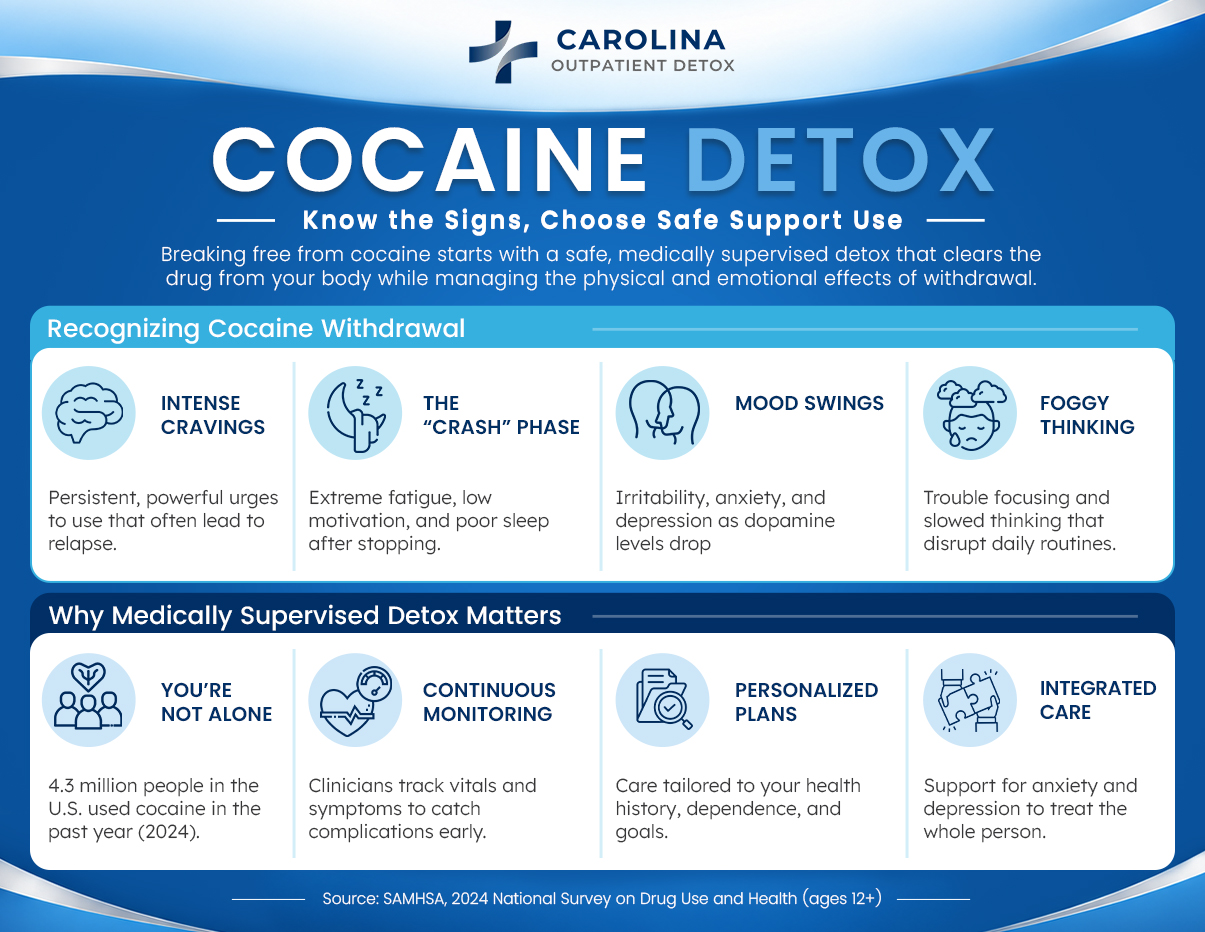
One of the most challenging aspects of cocaine withdrawal is the intense craving for the drug. These cravings can be persistent and powerful, often leading to relapse if not properly managed. Psychological dependence can make it feel impossible to function without cocaine.
Support from medical professionals helps individuals cope with cravings and develop healthier coping strategies.
Withdrawal from cocaine often brings emotional ups and downs. Individuals may feel irritable, anxious, or depressed. Mood swings can be unpredictable and may include feelings of hopelessness or agitation.
These emotional symptoms are a normal part of withdrawal but can be distressing without support. Professional care helps stabilize mood and provides reassurance during this difficult time.
Physical symptoms of cocaine withdrawal include fatigue, increased appetite, and sleep disturbances. Many people experience a “crash” phase, where they feel extremely tired and lack motivation. Headaches, muscle aches, and slowed thinking are also common.
These symptoms can last for several days and make it hard to maintain daily routines. Medical supervision ensures that physical health is monitored and managed throughout detox.
Cocaine withdrawal can affect thinking and behavior. Individuals may have trouble concentrating, feel restless, or act impulsively. Some may withdraw from social activities or struggle to complete work tasks.
Recognizing these changes is important for early intervention. Supportive care helps clients regain focus and rebuild healthy routines.
Dangers of Unsupervised Cocaine Detox
Detoxing from cocaine without professional help carries a high risk of relapse. Intense cravings and discomfort can drive individuals back to cocaine use, sometimes resulting in dangerous binge episodes. This cycle increases the risk of overdose and other health complications.
Structured, supervised detox provides the support needed to break this cycle and reduce the risk of relapse.
Mental Health Dangers and Emotional Instability Without Supervision
Unsupervised detox can lead to severe depression, anxiety, and even suicidal thoughts. Emotional instability is common during withdrawal, and without clinical support, individuals may struggle to cope. The lack of coping mechanisms can make the process overwhelming and unsafe.
Medical supervision ensures that mental health is closely monitored and that immediate help is available if needed.
Lack of Medical Support and Accountability During Detox
Without medical oversight, individuals may not recognize or address complications that arise during detox. There is no accountability or structure, making it easier to give in to cravings or abandon the process altogether.
Professional detox programs offer regular check-ins, medical monitoring, and a supportive environment that increases the chances of successful recovery.

Why Choose Medically Supervised Cocaine Detox?
Medically supervised detox provides continuous clinical monitoring to ensure safety throughout the process. Vital signs, mental health, and withdrawal symptoms are closely tracked, allowing for immediate intervention if complications arise.
This level of care reduces health risks and provides peace of mind for clients and their families.
Professional Management of Cravings and Mood Symptoms
Expert clinicians use evidence-based strategies to manage cravings and mood symptoms. Medications, counseling, and supportive therapies are tailored to each individual’s needs, making withdrawal more manageable.
This professional support helps clients stay committed to recovery and reduces the risk of relapse.
Customized Cocaine Detox and Stabilization Plans
Every client receives a personalized detox plan based on their unique history, health status, and goals. Plans may include medication management, therapy, and referrals for ongoing care.
Customization ensures that each client’s needs are met, increasing the likelihood of a successful detox and long-term recovery.
Integrated Support for Co-Occurring Mental Health Disorders
Many individuals struggling with cocaine addiction also face mental health challenges such as anxiety or depression. Medically supervised detox includes screening and support for co-occurring disorders, ensuring comprehensive care.
Integrated treatment addresses both substance use and mental health, laying the groundwork for lasting recovery.
Cocaine Detox at Carolina Outpatient Detox
Carolina Outpatient Detox offers flexible, outpatient detox programs designed for professionals and high-functioning individuals. Clients receive expert medical supervision while continuing to live at home and maintain daily responsibilities.
Outpatient care allows for privacy and discretion, making it easier to seek help without disrupting work or family life.
Each client begins with a thorough assessment to develop a personalized detox plan. This plan addresses the severity of dependence, co-occurring health concerns, and individual goals for recovery.
Ongoing adjustments ensure that care remains effective and responsive to changing needs.
Outpatient detox is ideal for those who cannot step away from work or personal commitments. Flexible scheduling, telehealth options, and evening appointments make it possible to receive care without sacrificing responsibilities.
This approach supports early intervention and helps clients maintain stability during recovery.
The clinical team at Carolina Outpatient Detox is experienced in managing the complexities of cocaine withdrawal. Compassionate care, confidentiality, and evidence-based practices are at the core of every program.
Clients receive encouragement, guidance, and support every step of the way.

What Comes After Cocaine Detox?
Ongoing Treatment and Therapy Options After Cocaine Detox
Detox is only the first step in recovery. Continued treatment is essential for addressing the underlying causes of addiction and building new coping skills. Outpatient therapy, group counseling, and medication management are common next steps.
Ongoing support helps clients maintain progress and prevent relapse.
Behavioral Therapies and Counseling for Cocaine Recovery
Behavioral therapies such as cognitive-behavioral therapy (CBT) are highly effective for cocaine addiction. These therapies help clients identify triggers, change negative thought patterns, and develop healthier behaviors.
Individual and group counseling provide a safe space to process emotions and build a support network.
Relapse Prevention Strategies and Trigger Management
Relapse prevention is a key focus after detox. Clients learn to recognize triggers, manage stress, and develop strategies for avoiding high-risk situations. Ongoing support from therapists and peers reinforces these skills.
Regular check-ins and accountability help clients stay on track with their recovery goals.
Long-Term Recovery Planning and Aftercare Support
Long-term recovery requires planning and ongoing support. Aftercare programs may include regular addiction therapy, support groups, and wellness activities. These resources help clients maintain sobriety and continue personal growth.
Carolina Outpatient Detox provides referrals and guidance for aftercare, ensuring clients have the tools they need for lasting success.
Signs You Need Cocaine Detox Now
If you have tried to quit cocaine but find yourself returning to use, it may be time to seek professional help. Difficulty stopping despite negative consequences is a clear sign of dependence.
Early intervention can prevent further harm and make recovery more achievable.
Frequent “crash” phases, marked by exhaustion and intense cravings, indicate that your body is struggling to adjust without cocaine. These symptoms can be overwhelming and increase the risk of relapse.
Professional detox provides the support needed to manage these challenges safely.
Cocaine use can lead to worsening mental health, including depression, anxiety, and mood swings. If you notice changes in your ability to function at work, home, or in relationships, detox may be necessary.
Addressing these issues early can help restore stability and well-being.
Relying on cocaine to cope with stress or emotions is a sign that professional support is needed. This pattern can quickly escalate, leading to greater dependence and more severe consequences.
Seeking help now can prevent further harm and support healthier coping strategies.

Start Your Cocaine Detox and Recovery Journey
Taking the first step toward recovery is a courageous decision. Carolina Outpatient Detox offers confidential consultations and expert guidance to help you begin your cocaine detox safely. Our team understands the unique needs of professionals and high-functioning individuals, providing flexible, discreet care that fits your life.
To start your recovery journey, contact Carolina Outpatient Detox for a confidential assessment and personalized treatment plan. Regain control, restore your health, and build a foundation for lasting recovery with our expert support.
Frequently Asked Questions About Cocaine Detox
What Are the Early Signs of Cocaine Withdrawal?
Early signs include intense cravings, fatigue, irritability, anxiety, and difficulty concentrating. Some people may also experience increased appetite and sleep disturbances.
How Long Does Cocaine Detox Take to Complete?
Cocaine detox typically lasts from several days to a week, depending on the severity of dependence and individual health factors. Some symptoms, like cravings, may persist longer and require ongoing support.
Is Outpatient Cocaine Detox Safe for Working Professionals?
Yes, outpatient detox is designed for individuals who need to maintain work and personal responsibilities. Medical supervision ensures safety while allowing clients to continue daily activities.
What Support and Resources Are Available During Cocaine Detox?
Clients receive medical monitoring, counseling, and personalized care plans. Additional resources may include telehealth appointments, support groups, and referrals for ongoing therapy.
Can I Continue Working While Undergoing Outpatient Cocaine Detox?
Most clients can continue working during outpatient detox, thanks to flexible scheduling and discreet care. The program is tailored to minimize disruption to daily life.
What Happens After Completing Cocaine Detox?
After detox, clients transition to ongoing treatment such as therapy, counseling, and relapse prevention programs. Continued support is essential for maintaining recovery and building a healthy, substance-free life.

Dr. Brady Schroer obtained his Bachelor of Science degree in Biopsychology with an emphasis in Chemistry. He then attended Medical School at the Kansas City University of Medicine and Biosciences. After completing medical school, Dr. Schroer completed his general psychiatry residency at a nationally known treatment facility, the Menninger Clinic. Immediately after residency, Dr. Schroer worked in a large medical hospital system caring for geriatric clients, adult inpatient clients, completing consultation liaison evaluations on the medical floors, conducting Electroconvulsive Treatment for clients with severe/refractory depression, and caring for complicated delirium patients in the ICU. During this time, He served as Medical Director and Chief of Psychiatry before moving to Western North Carolina.