

Cocaine remains detectable in your system for varying periods: 12-24 hours in blood, 1-2 days in saliva, 2-4 days in urine for occasional users (up to 14 days for heavy users), and up to 90 days in hair. Your metabolism, frequency of use, dosage, and body composition greatly impact clearance times. While hydration and exercise may help, they won’t guarantee passing a drug test. Medical detoxification offers supervised support for those seeking complete elimination.
Cocaine Detection Windows for Different Drug Tests
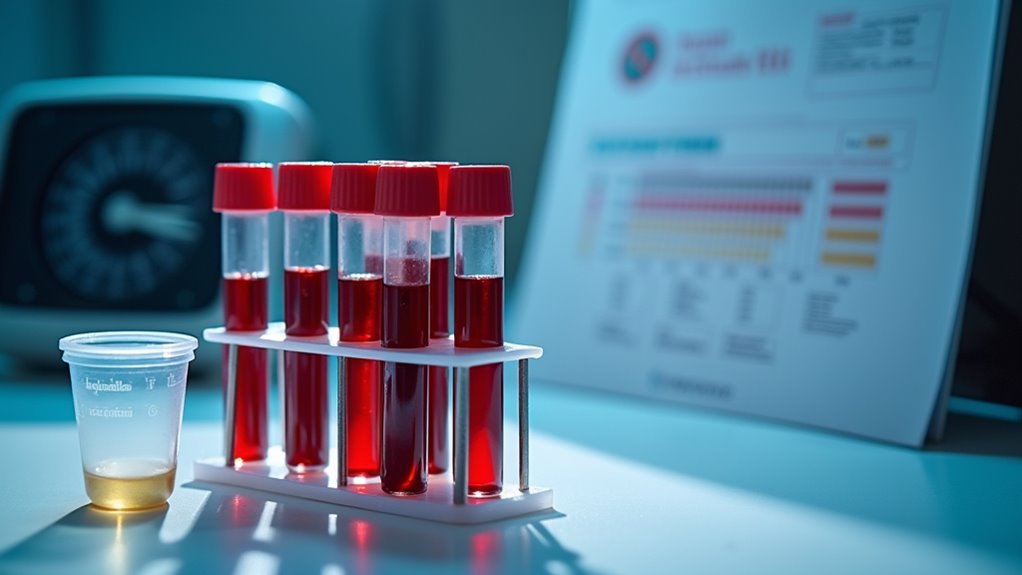
Regarding drug testing, cocaine detection windows vary greatly across distinct test methods. Your body processes cocaine (powdered and otherwise) rapidly, but metabolites remain detectable long after the euphoric effects disappear.
Blood tests identify cocaine for 12-24 hours post-use, while saliva detection spans 1-2 days. Urine tests, the most common cocaine test type, can detect metabolites for 2-4 days in occasional users and up to 14 days in heavy users. Hair follicle analysis offers the longest detection window, identifying cocaine for up to 90 days, though it won’t reveal very recent use.
The sensitivity of these detection methods depends on multiple factors including dosage, frequency of use, metabolism, and general health. Understanding these timeframes helps you anticipate how long cocaine remains detectable in your system through different testing approaches.
Factors That Affect How Long Cocaine Stays in Your System
Several physiological and behavioral factors influence cocaine’s elimination timeline from your body. Your metabolic rate, governed by maturity, weight, and liver function, directly impacts how quickly you’ll clear the drug, while frequent use leads to accumulation and extended detection periods. The dose consumed and the cocaine’s purity also considerably affect clearance time, with higher amounts or more concentrated forms requiring longer periods to metabolize completely.
Metabolism Rate Differences
While cocaine detection times provide general guidelines, individual metabolism rates greatly impact how quickly your body processes and eliminates the drug. Your unique metabolic profile determines the efficiency with which enzymes break down cocaine into metabolites for excretion.
Metabolism variations occur due to genetic factors, maturity, and general health status. Younger individuals typically metabolize cocaine faster than older adults, while those with liver impairments process the drug more slowly. Individual differences in enzyme activity, particularly cholinesterase levels, can create significant disparities in elimination times between users consuming identical amounts. Your body mass index, hydration level, and basal metabolic rate further influence how rapidly cocaine clears from your system. These biological variations explain why standard detection windows remain approximate rather than absolute timeframes.
Frequency of Use
Three key patterns of cocaine consumption greatly alter how long the drug remains detectable in your system. Initially, occasional use typically clears your system faster, with metabolites becoming undetectable in urine within 2-4 days. Secondly, habitual use creates a notably different timeline, as cocaine and its metabolites accumulate in body tissues, particularly fat cells, extending detection periods to 7-14 days or longer.
Third, binge patterns consuming large quantities in short timeframes create higher concentration levels that require further processing time. Your body must metabolize not just the primary compound but also the substantial buildup of benzoylecgonine and other metabolites. If you’ve engaged in habitual use for months or years, complete clearance might take several weeks, especially for hair testing, which can detect use from 90+ days prior.
Dose and Purity
The amount of cocaine consumed directly correlates with detection timeframes, as higher doses introduce more of the drug that your body must process. Dose variability greatly impacts elimination rates, with larger quantities requiring extended clearance periods. Your body metabolizes cocaine at a relatively consistent rate, creating a proportional relationship between intake quantity and detection duration.
| Dose Level | Purity | Approximate Detection Window | Metabolite Concentration |
|---|---|---|---|
| Low (≤50mg) | Low | 24-36 hours (urine) | Minimal |
| Low (≤50mg) | High | 36-48 hours (urine) | Moderate |
| High (≥100mg) | Low | 48-72 hours (urine) | Moderate |
| High (≥100mg) | High | 72-96+ hours (urine) | Substantial |
Cocaine potency varies greatly between samples, with street drugs often containing adulterants that may alter metabolism rates and detection profiles.
The Science Behind Cocaine Metabolism
Cocaine metabolism involves a complex series of biochemical processes that determine how quickly the drug is eliminated from your body. When you ingest cocaine, your liver initiates enzymatic breakdown through two primary metabolic pathways. The dominant route involves hydrolysis by plasma and liver esterases, converting cocaine to benzoylecgonine, which remains detectable longer than the parent drug.
Simultaneously, a secondary pathway produces norcocaine through N-demethylation, while oxidative metabolism generates further metabolites. Your body’s pH level greatly influences these processes acidic urine accelerates excretion, while alkaline conditions prolong retention. Genetic variations in your metabolic enzymes can alter clearance rates by up to 30%, explaining why elimination times differ between individuals with similar consumption patterns. These metabolites serve as the targets for standard drug screening tests.
How Frequency of Use Impacts Detection Times

Occasional cocaine users typically clear the drug from their systems more quickly than regular users who’ve developed tolerance and metabolic adaptations. Your frequency of use directly influences detection windows, with chronic users showing positive results for considerably longer periods after their last dose. If you’ve engaged in binge use, you’ll experience prolonged detection timeframes due to the higher concentration of cocaine and metabolites stored in your tissues.
Occasional vs. Regular Users
When comparing detection timelines, frequent cocaine users face notably longer clearance periods than those who use the drug occasionally. This differential elimination rate stems from the accumulation of cocaine metabolites in body tissues, particularly in chronic users.
| User Type | Detection Window |
|---|---|
| Occasional users | 2-3 days in urine |
| Regular users | 5-7 days in urine |
| Occasional users | 24-36 hours in blood |
| Regular users | Up to 48 hours in blood |
| Occasional users | 1-2 days in saliva |
If you’re a regular user, benzoylecgonine (cocaine’s primary metabolite) can accumulate in fat tissues and gradually release back into your bloodstream, extending detection windows considerably. Occasional users typically clear the drug faster as their bodies haven’t developed the same level of metabolite storage. Your individual clearance rate also depends on metabolism efficiency, hydration levels, and general health status.
Tolerance and Metabolic Changes
As a user’s exposure to cocaine increases over time, the body undergoes significant adaptations that alter how the drug is processed and eliminated. Your liver develops improved enzymatic activity specifically targeting cocaine, potentially accelerating metabolic breakdown.
These metabolic adaptations can affect detection timeframes in counterintuitive ways. While your body becomes more efficient at processing cocaine, chronic use simultaneously creates residual accumulation in fatty tissues. Your tolerance levels increase, requiring higher doses to achieve the same effect, which fundamentally deposits more of the drug into your system.
Additionally, your kidney function may change with prolonged exposure, affecting excretion rates. These physiological changes mean that despite developed tolerance, detection windows often extend rather than shorten for regular users creating a paradoxical relationship between tolerance levels and elimination timeframes.
Binge Use Effects
Binge patterns of cocaine consumption greatly alter the drug’s metabolic timeline compared to isolated use. When you repeatedly administer cocaine within a short timeframe, metabolites accumulate exponentially in your system, markedly extending detection windows. The binge consequences include prolonged clearance rates due to metabolic pathway saturation.
| Usage Pattern | Detection Extension | Psychological Effects |
|---|---|---|
| Weekend Binge | 2-3 days extra | Heightened paranoia |
| Multi-day Use | 4-7 days extra | Severe dysphoria |
| Chronic Binge | 1-2 weeks extra | Psychosis risk |
Your body’s ability to eliminate cocaine becomes increasingly compromised during binges. This metabolic overload not only extends detection timelines but also intensifies withdrawal symptoms. The psychological effects of binge use including anxiety, paranoia, and agitation often persist well beyond the drug’s physical presence, complicating recovery and potentially triggering further use.
Hydration and Other Natural Methods to Clear Cocaine Faster

While no method can instantly remove cocaine from your system, several natural approaches may speed up the elimination process. Adequate hydration stands as the most effective natural strategy, as water facilitates kidney filtration and urinary excretion of cocaine metabolites. Consuming 2-3 liters daily may improve clearance rates considerably.
Beyond hydration methods, natural detoxifiers can support your body’s elimination pathways:
- Regular aerobic exercise increases metabolism and sweating, potentially expediting cocaine elimination through multiple excretion routes
- Antioxidant-rich foods (berries, leafy greens) support liver function, which metabolizes cocaine
- Fiber-dense nutrition promotes intestinal motility, facilitating elimination of toxins through fecal matter
These approaches won’t circumvent detection on drug tests but may reduce the duration cocaine metabolites remain in your system by supporting your body’s natural detoxification mechanisms.
Medical Detoxification Options for Cocaine
Medical detoxification for cocaine addiction often involves structured inpatient programs that provide 24-hour medical supervision during withdrawal. You’ll typically undergo an assessment to determine if medication-assisted treatment options, such as antidepressants or anti-anxiety medications, might help manage your specific withdrawal symptoms. These professional interventions can greatly improve your chances of successful detoxification by addressing both the physical dependence and psychological aspects of cocaine use disorder.
Inpatient Detox Programs
For individuals struggling with severe cocaine dependence, inpatient detox programs offer thorough medical supervision during the withdrawal process. These structured environments provide 24/7 monitoring of essential signs and symptoms, with medical professionals ready to intervene if complications arise. Inpatient care removes you from environmental triggers that might lead to relapse during this vulnerable period.
The detox benefits of residential treatment include:
- Medication administration to manage withdrawal symptoms and cravings
- Immediate medical intervention for psychological distress, including anxiety, paranoia, or suicidal ideation
- Seamless shift to ongoing addiction treatment programming
These programs typically last 5-10 days, depending on your usage history and physiological response to detoxification. While more intensive than outpatient options, inpatient detoxification provides the highest level of safety and support during cocaine elimination from your system.
Medication-Assisted Treatment
Unlike opioid addiction treatment, medication-assisted treatment (MAT) for cocaine detoxification lacks FDA-approved specific medications targeting cocaine dependence directly. However, several medication approaches are being researched and used off-label to manage withdrawal symptoms and reduce cravings.
| Medication Class | Examples | Target Symptoms | Treatment Effectiveness |
|---|---|---|---|
| Antidepressants | Bupropion, Fluoxetine | Depression, cravings | Moderate for depression, limited for abstinence |
| Anticonvulsants | Topiramate, Gabapentin | Impulsivity, cravings | Mixed results in clinical trials |
| Stimulants | Modafinil, Methylphenidate | Cognitive function, fatigue | Promising for treatment retention |
| Dopamine agonists | Amantadine, Bromocriptine | Reward circuitry, cravings | Limited effectiveness in studies |
Your doctor will determine the most appropriate medication regimen based on your specific symptoms, medical history, and co-occurring disorders. These pharmacological interventions work best when combined with behavioral therapies in a thorough treatment plan.
The Truth About Home Remedies for Passing Drug Tests
Why do so many individuals turn to unproven methods when facing an impending drug test? Desperation often drives people in the direction of dubious home remedies that promise to accelerate cocaine elimination. Clinical evidence consistently indicates these approaches are ineffective and potentially dangerous.
Common ineffective methods include:
- Excessive water consumption, which merely dilutes urine temporarily but doesn’t accelerate cocaine metabolism
- Vitamin B supplements and creatine, mistakenly believed to mask detection markers
- Vinegar, lemon juice, or baking soda consumption, which cannot alter the body’s metabolic pathways for cocaine
Your body eliminates cocaine through established metabolic processes that cannot be meaningfully accelerated through home remedies. Drug tests detect cocaine metabolites with sophisticated methods that aren’t fooled by these interventions. Medical detoxification remains the only scientifically supported approach.
How Body Weight and Metabolism Influence Cocaine Clearance
Body weight and metabolic rate greatly impact how quickly cocaine clears from your system, though these factors interact in complex ways that aren’t always intuitive.
While higher body weight can potentially store more cocaine metabolites in fat tissues, it doesn’t necessarily mean slower clearance. What matters more is your body composition and metabolic efficiency. Individuals with higher lean muscle mass typically process toxins faster than those with higher fat percentages.
Your metabolic rate influenced by lifespan, genetics, thyroid function, and physical activity directly affects clearance speed. A faster metabolism accelerates all bodily processes, including drug elimination. You’ll clear cocaine more quickly if you’re younger, physically active, and have naturally efficient metabolic processes.
These factors explain why two people of identical weight might eliminate cocaine at dramatically different rates, making standardized detection timelines unreliable for individual cases.
Understanding Benzoylecgonine: Cocaine’s Primary Metabolite
When cocaine enters your bloodstream, your liver immediately begins converting it into several metabolites, with benzoylecgonine being the most notable and longest-lasting compound produced during this process. This primary metabolite remains detectable much longer than cocaine itself, which has a relatively short half-life of approximately 1 hour.
During cocaine metabolism, benzoylecgonine functions as:
- A biological marker that drug tests specifically target, detectable in urine for up to 4 days in occasional users and up to 14 days in chronic users
- A compound with a considerably longer half-life (12-18 hours) compared to parent cocaine
- An inactive metabolite that doesn’t produce cocaine’s euphoric effects but serves as definitive evidence of cocaine consumption
Understanding benzoylecgonine’s persistence explains why you’ll test positive long after cocaine’s effects have subsided.
Legal Implications of Positive Cocaine Test Results
Testing positive for cocaine or its metabolite benzoylecgonine can trigger serious legal consequences that vary considerably depending on your jurisdiction and the context of testing. In workplace scenarios, you’ll likely face employment ramifications ranging from mandatory counseling to immediate termination, particularly in safety-sensitive positions or federal employment.
If you’re on probation or parole, a positive test typically constitutes a violation that may result in revocation and incarceration. For professional license holders (medical, legal, aviation), testing positive often initiates disciplinary proceedings that can suspend or revoke your credentials. In child custody cases, courts frequently view cocaine use as evidence of parental unfitness.
Remember that detection windows affect your risk urine tests can identify cocaine metabolites for 2-4 days, while hair testing extends this window to months.
Frequently Asked Questions
Can Secondhand Cocaine Smoke Cause a Positive Drug Test Result?
Secondhand exposure to cocaine smoke is unlikely to cause a positive drug testing result. Unlike secondhand marijuana smoke, cocaine particles in the air typically don’t get absorbed in sufficient quantities to trigger standard drug tests. You’d need to be in an extremely enclosed space with heavy cocaine smoke for an extended period. Most drug testing methods have threshold levels designed to differentiate between actual use and minimal environmental exposure.
Does Pregnancy Affect How Long Cocaine Remains Detectable?
Pregnancy notably alters how your body processes substances. During pregnancy, your metabolism changes, organ function shifts, and blood volume increases all factors that can affect cocaine clearance. You’ll experience reduced hepatic metabolism and decreased renal clearance, potentially extending detection windows. These pregnancy implications warrant serious consideration for maternal health, as cocaine metabolites may remain detectable longer and could cross the placental barrier, presenting extra risks beyond standard detection concerns for non-pregnant individuals.
How Do Prescription Medications Interact With Cocaine Detection Tests?
Certain prescription medications can cause false positives in cocaine detection tests through drug interactions. Common culprits include some antibiotics, antipsychotics, and pain medications that share metabolic pathways or chemical structures with cocaine. You’ll need to disclose all your medications to testing facilities to guarantee testing accuracy. Lab confirmatory tests like GC-MS can differentiate between cocaine and medications, reducing false positives. Always inform medical personnel about prescriptions when undergoing toxicology screening to avoid misinterpretation of results.
Can Cocaine Use Be Detected in Hair Dye or Chemically Treated Hair?
Yes, cocaine can be detected in chemically treated hair. Hair follicle testing captures drug metabolites deposited in hair shafts as they grow. While hair dye or bleaching may slightly reduce cocaine concentrations, these treatments typically don’t completely eliminate detectable traces. The metabolization process leaves markers that specialized tests can identify even in treated hair. You’ll find that modern testing methods compensate for chemical treatments, though extreme damage to hair structure might occasionally affect test accuracy.
Do Different Forms of Cocaine (Crack vs. Powder) Have Different Detection Times?
Crack cocaine and powder cocaine have similar detection windows despite their differences. Crack’s higher potency may result in more concentrated metabolites initially, but both forms produce the same benzoylecgonine marker that drug tests detect. Powder purity varies widely, affecting general cocaine concentration in your system. However, these variables primarily impact detection threshold crossing rather than fundamentally altering the metabolic timeline. Your individual metabolism, frequency of use, and dosage remain more significant detection determinants than the specific form used.

Dr. Brady Schroer obtained his Bachelor of Science degree in Biopsychology with an emphasis in Chemistry. He then attended Medical School at the Kansas City University of Medicine and Biosciences. After completing medical school, Dr. Schroer completed his general psychiatry residency at a nationally known treatment facility, the Menninger Clinic. Immediately after residency, Dr. Schroer worked in a large medical hospital system caring for geriatric clients, adult inpatient clients, completing consultation liaison evaluations on the medical floors, conducting Electroconvulsive Treatment for clients with severe/refractory depression, and caring for complicated delirium patients in the ICU. During this time, He served as Medical Director and Chief of Psychiatry before moving to Western North Carolina.