

Morphine remains in your system for varying periods depending on the test type: 2-4 days in urine, 12-24 hours in blood, 1-4 days in saliva, and up to 90 days in hair. Your individual factors like liver function, kidney health, metabolism rate, and dosage greatly impact detection windows. The drug’s half-life ranges from 2-3 hours for immediate release to 12-24 hours for extended formulations. Understanding these timeframes helps you navigate medical or testing situations more effectively.
Detection Windows for Morphine in Different Test Types

Detection windows for morphine vary considerably depending on the testing method used. When undergoing morphine screening, you’ll encounter different detection timeframes based on the biological specimen tested. Urine tests can detect morphine for 2-4 days after use, remaining the most common method due to their balance of test accuracy and cost-effectiveness. Blood tests offer a narrower window of just 12-24 hours, but provide precise quantitative results during acute intoxication assessment. Saliva testing detects morphine for approximately 1-4 days and offers non-invasive collection advantages. Hair analysis presents the longest detection period up to 90 days though it cannot pinpoint recent use timing. Each testing method has specific sensitivity thresholds that may affect detection capabilities, particularly at low dosages or in chronic users with altered metabolism.
Factors That Affect How Long Morphine Remains Detectable
While standard detection windows provide general guidelines, numerous physiological and pharmacological factors considerably influence how long morphine remains detectable in your system. Your metabolism rate, determined by life stage, genetics, and liver function, greatly impacts elimination speed. Kidney function affects morphine clearance through urine.
Your body composition matters too higher body fat percentage can extend detection periods as morphine metabolites may accumulate in fatty tissues. Frequent users develop tolerance and altered metabolism patterns compared to one-time users.
Drug interactions can profoundly alter morphine’s elimination timeline. Medications affecting liver enzymes may accelerate or slow metabolic processes. Furthermore, dosage effects are predictable higher or repeated doses typically extend detection windows as your body requires more time to process and eliminate larger quantities of the drug.
Morphine Metabolism and Elimination Process
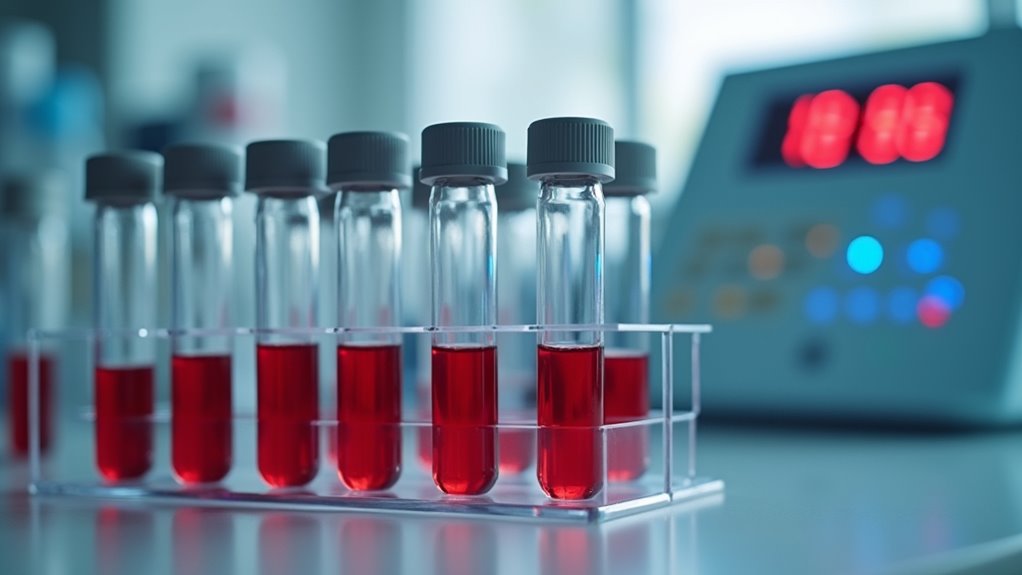
Morphine undergoes extensive metabolism through the liver’s UDP-glucuronosyltransferase enzymes, primarily converting the drug into morphine-3-glucuronide and morphine-6-glucuronide. Your body eliminates morphine in a biphasic pattern, with an initial half-life of 2-3 hours followed by a terminal half-life of approximately 15 hours. The elimination process depends heavily on hepatic function, with impaired liver function potentially extending detection times due to slower conversion and clearance of the drug and its metabolites.
Liver Enzyme Pathways
The primary metabolism of morphine occurs through glucuronidation, a process facilitated by the UDP-glucuronosyltransferase (UGT) enzyme family in the liver. This biotransformation creates two major metabolites: morphine-3-glucuronide (M3G) and morphine-6-glucuronide (M6G). Your liver function directly impacts how quickly morphine can be processed and eliminated from your body.
Key enzyme pathways involved include:
- UGT2B7 – responsible for approximately 60% of morphine metabolism
- UGT1A8 – contributes to secondary metabolism in the intestinal tract
- CYP3A4 – plays a minimal role in morphine metabolism (less than 5%)
- P-glycoprotein (P-gp) – influences morphine’s distribution and excretion
Genetic variations in these enzyme systems can greatly alter enzyme activity, explaining why elimination rates vary considerably between individuals. Compromised liver function will typically prolong morphine’s presence in your system.
Half-Life Breakdown Phases
After entering your system, morphine undergoes a biphasic elimination process, characterized by distinct half-life phases that dictate how long the drug remains detectable. The initial distribution phase has a half-life of approximately 1.5-4.5 hours, when morphine rapidly moves from your bloodstream into tissues. This is followed by the terminal elimination phase, with a half-life of 2-15 hours, during which your body gradually clears the drug.
The half-life significance lies in predicting detection windows across testing methods. Your liver’s metabolic pathways convert morphine primarily to morphine-3-glucuronide and morphine-6-glucuronide through glucuronidation. These metabolites have their own elimination rates, with M6G having a longer half-life (4-6 hours) than the parent compound. Your kidney function critically affects these clearance rates, potentially extending detection times if impaired.
Half-Life of Morphine and Its Clinical Significance
Morphine’s half-life of 2-3 hours means your body eliminates half the drug within this timeframe, though extended-release formulations can extend this to 12-24 hours. Your individual factors including maturity, liver function, kidney health, and genetics significantly alter this elimination rate, potentially extending detection times. Understanding these variations helps clinicians tailor dosing schedules, avoid accumulation, and manage withdrawal timing when discontinuing the medication.
Elimination Rate Factors
When considering how quickly morphine clears from your system, understanding its half-life provides critical insight into the drug’s elimination pattern. Several factors considerably affect how rapidly your body processes and eliminates morphine through different elimination pathways.
- Liver function – Hepatic impairment slows glucuronidation, the primary metabolic process for morphine
- Kidney health – Renal dysfunction delays excretion of morphine metabolites, particularly morphine-6-glucuronide
- Age – Elderly patients typically experience reduced clearance rates due to diminished organ function
- Dosage impact – Higher doses may temporarily saturate metabolic pathways, extending elimination time
Your individual clearance rate differs based on these physiological factors. Genetic variations in UGT2B7 enzyme activity can further modify elimination efficiency, creating considerable interpersonal differences in how quickly morphine leaves your system.
Extended-Release Versus Immediate
The formulation of morphine greatly influences its detection window, with extended-release versions displaying markedly different pharmacokinetic profiles compared to immediate-release preparations. Extended-release effects typically maintain therapeutic blood levels for 8-24 hours, depending on the specific formulation. These preparations gradually release the active compound, resulting in a more stable plasma concentration and prolonged detection period in bodily fluids.
In contrast, immediate-release onset occurs within 15-60 minutes, with peak plasma concentrations achieved rapidly. You’ll metabolize and eliminate this formulation more quickly, shortening the detection window. However, while the immediate-release version clears faster, both formulations ultimately produce the same metabolites (primarily morphine-3-glucuronide and morphine-6-glucuronide) that testing protocols detect. Understanding these differences is essential when interpreting drug test results or planning medication schedules.
Individual Metabolism Variations
Individual metabolism varies considerably among patients, creating substantial differences in how long morphine remains detectable in your system. The half-life of morphine typically ranges from 2-3 hours, but your personal clearance rate depends on several key factors:
- Genetic factors – Variations in CYP450 enzymes can profoundly alter morphine metabolism, with some patients processing the drug up to 50% faster than others
- Age differences – Elderly patients often experience 25-40% longer elimination times due to reduced hepatic function and decreased glomerular filtration rates
- Liver function – Hepatic impairment can extend morphine’s half-life by 2-3 times the normal duration
- Kidney status – Since morphine metabolites are primarily excreted renally, impaired kidney function can increase detection windows by up to 120 hours
Common Misconceptions About Morphine Detection Times
Many people incorrectly believe that morphine completely clears from the body within 24 hours after use. This represents one of the most dangerous misconception myths surrounding opioid detection. While morphine’s effects typically subside within 4-6 hours, the drug remains detectable much longer.
Another common fallacy is that hydration can greatly accelerate morphine elimination. Though increasing fluid intake may dilute urine samples, it doesn’t considerably alter the drug’s metabolic timeline. Detection delays can also occur when morphine converts to morphine-6-glucuronide, which remains in your system longer than the parent compound.
You should also recognize that home detox methods promoted online (vinegar, cranberry juice, or niacin supplements) have no scientific evidence supporting their effectiveness for expediting morphine clearance. These misconceptions can lead to unexpected positive test results.
How to Safely Manage Morphine Use and Testing Scenarios

When prescribed morphine for legitimate medical purposes, communicating openly with your healthcare provider about anticipated drug tests remains your most essential strategy. Understanding safe dosage protocols and addiction risks empowers you to navigate testing scenarios appropriately.
- Maintain documentation – Keep prescription records, medical notes, and pharmacy receipts readily available for verification purposes
- Follow prescribed schedules – Never adjust dosage without medical consultation, as deviations affect detection times and increase addiction risks
- Disclose all medications – Inform testing authorities about legitimate prescriptions before screening to prevent false positives
- Consider clearance variables – Your metabolism, hydration status, and organ function influence elimination rates, so discuss these factors with your doctor when anticipating tests
If concerned about dependency, discuss tapering protocols with your physician rather than abruptly discontinuing use.
Frequently Asked Questions
Can I Pass a Drug Test by Drinking Lots of Water?
Drinking excessive water won’t guarantee passing a drug test. While hydration effects may dilute your urine temporarily, modern tests detect this dilution and may flag your sample as suspicious. Most effective detox methods require adequate time for your body to naturally eliminate substances. You’ll find that laboratory testing technology has evolved to identify manipulation attempts. For reliable results, abstinence remains the only scientifically-proven approach. Testing facilities routinely check for temperature, creatinine levels, and specific gravity to prevent cheating.
Does Secondhand Exposure to Morphine Affect Drug Test Results?
Secondhand exposure to morphine is highly unlikely to affect your drug test results. Unlike marijuana smoke, morphine doesn’t readily aerosolize in amounts sufficient for passive absorption that would trigger a positive test. You’d need direct contact with the substance to register detectable levels. Modern drug tests have thresholds specifically designed to differentiate between legitimate exposure and incidental environmental contact. If you’re concerned about false positives, inform the testing facility about any prescription medications you’re taking.
Will Prescription Painkillers Cause False Positives for Morphine?
Prescription painkillers can cause false positives for morphine on drug tests. Certain opioid medications like codeine and hydrocodone metabolize partially into morphine in your body, affecting drug test accuracy. Semisynthetic opioids such as oxycodone and hydromorphone may trigger positive results depending on the test’s specificity. To minimize painkiller interactions with testing, always disclose your prescribed medications before screening. More sophisticated confirmation tests like GC-MS can differentiate between specific opioids, reducing false positive rates considerably.
Can Exercise Help Remove Morphine From My System Faster?
Exercise may potentially accelerate morphine elimination through increased metabolism and circulation. While physical activity elevates your metabolic rate and improves blood flow, research specifically linking exercise to faster morphine clearance remains limited. Your body primarily eliminates morphine through liver metabolism and kidney excretion, with most cleared within 72 hours. Hydration during exercise might support kidney function, but don’t expect dramatic reductions in detection times. Individual factors like metabolism, dosage, and frequency of use ultimately determine elimination rates.
Does Morphine Show up Differently Than Other Opioids in Testing?
Yes, morphine shows up differently than other opioids in testing. Your body creates specific metabolites during morphine metabolism that standard drug tests can identify. Most opioid tests differentiate between morphine, heroin, codeine, and synthetic opioids by detecting these unique metabolic byproducts. The immunoassay screening tests used initially may detect multiple opioids, but confirmatory testing with GC-MS or LC-MS can precisely identify morphine and distinguish it from other opioids you might have used.

Dr. Brady Schroer obtained his Bachelor of Science degree in Biopsychology with an emphasis in Chemistry. He then attended Medical School at the Kansas City University of Medicine and Biosciences. After completing medical school, Dr. Schroer completed his general psychiatry residency at a nationally known treatment facility, the Menninger Clinic. Immediately after residency, Dr. Schroer worked in a large medical hospital system caring for geriatric clients, adult inpatient clients, completing consultation liaison evaluations on the medical floors, conducting Electroconvulsive Treatment for clients with severe/refractory depression, and caring for complicated delirium patients in the ICU. During this time, He served as Medical Director and Chief of Psychiatry before moving to Western North Carolina.