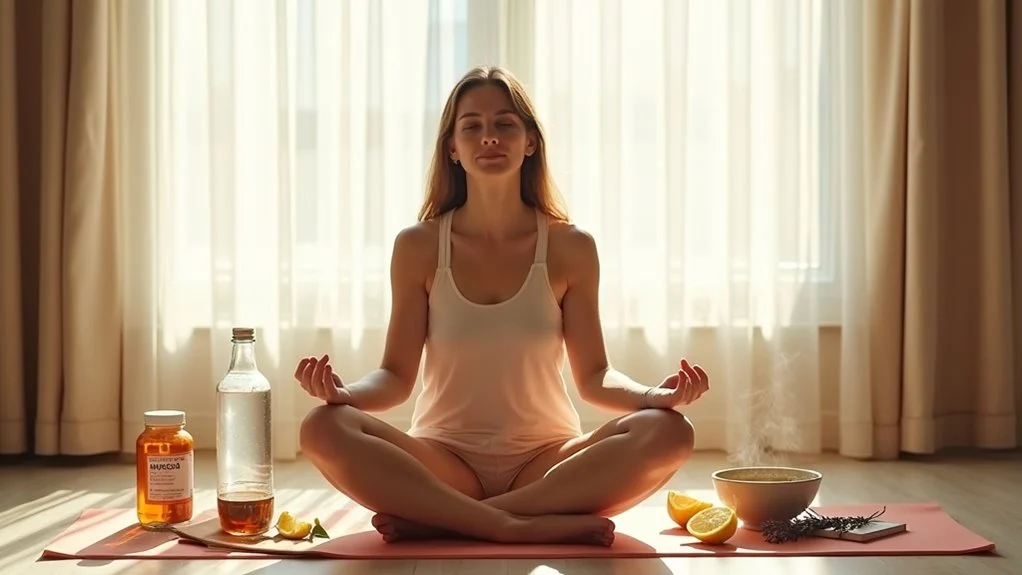
To combat hangxiety fast, rehydrate with electrolyte-rich fluids and eat complex carbs with protein to stabilize blood sugar. Practice deep breathing and light exercise to release endorphins. Try cold showers or contrast therapy to reset your nervous system. Use mindfulness to break thought spirals and connect with supportive friends. Challenge catastrophic thinking and create a calming sensory environment with dim lights and gentle sounds. These science-backed techniques target both physical and psychological aspects of post-drinking anxiety.
Rehydrate Strategically With Electrolyte-Rich Fluids
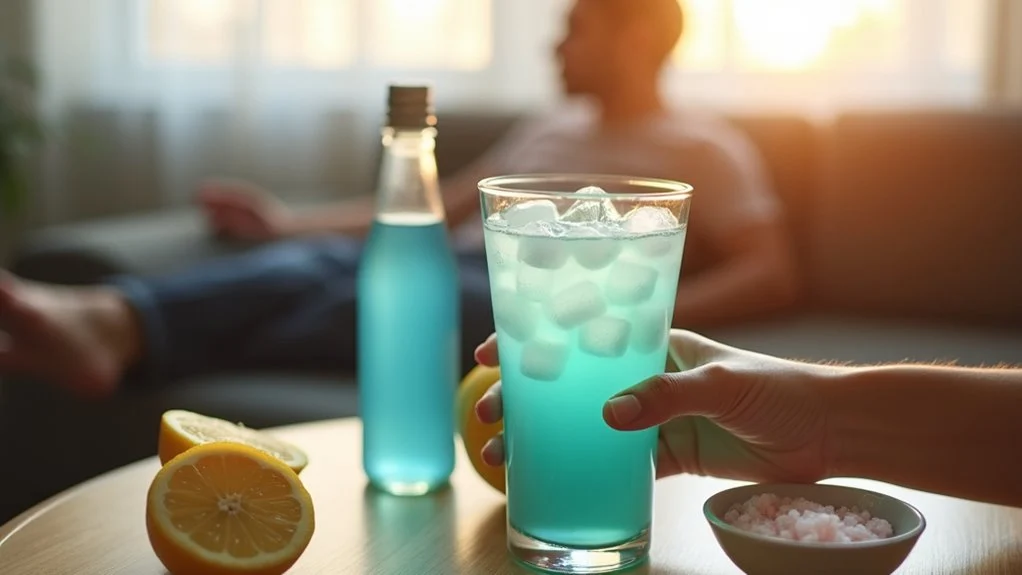
When hangxiety has you in its grip, rehydration becomes your initial line of defense. Alcohol’s diuretic effect severely depletes your body’s water levels and essential electrolytes, intensifying both physical discomfort and anxiety symptoms. Your nervous system needs proper hydration to function effectively.
Don’t just reach for plain water. Focus on electrolyte-rich fluids that restore sodium, potassium, and magnesium levels. Consider coconut water, sports drinks (preferably low-sugar varieties), or electrolyte tablets dissolved in water. Bone broth offers a nourishing alternative with added protein benefits.
Sip consistently throughout your recovery period rather than gulping large amounts at once. The hydration importance can’t be overstated your brain’s ability to regulate mood improves as you restore fluid balance. Establish multiple electrolyte sources to accelerate your return to both physical and emotional equilibrium.
Stabilize Blood Sugar With Complex Carbohydrates
Beyond rehydration, your body’s blood sugar management plays a central role in hangxiety relief. Alcohol consumption dramatically depletes glucose levels, triggering stress hormones that amplify anxiety symptoms.
Choose complex carbs to restore balance without causing further blood sugar spikes. Opt for oatmeal, whole grain toast, or brown rice which release glucose gradually into your bloodstream. Pair these with a small amount of protein like nut butter or eggs to extend the stabilizing effect.
Avoid sugary quick fixes that might temporarily elevate your mood but lead to crashes that worsen hangxiety. Instead, focus on nutrient-dense options like sweet potatoes or quinoa that provide sustained energy. Eating small portions every few hours helps maintain steady blood sugar levels, giving your nervous system the consistent support it needs to recover.
Practice Deep Breathing and Progressive Muscle Relaxation
Physical relaxation techniques provide powerful relief from hangxiety by directly counteracting the nervous system imbalance alcohol creates. When you’re experiencing alcohol-induced anxiety, your body remains in a heightened stress response that deep breathing can effectively interrupt.
Begin by finding a quiet space where you won’t be disturbed. Inhale slowly through your nose for four counts, hold briefly, then exhale for six counts. Repeat for five minutes, focusing solely on your breath. Follow this with progressive muscle relaxation systematically tensing and releasing muscle groups from your toes to your face.
These techniques activate your parasympathetic nervous system, lowering stress hormones like cortisol and adrenaline that fuel hangxiety. Practice both methods several times throughout your recovery day for cumulative calming effects.
Engage in Light Physical Activity to Release Endorphins
Light physical activity can quickly reduce hangxiety by triggering your body’s natural endorphin release. Consider taking a gentle walk in nature, practicing a few simple yoga stretches, or engaging in a brief 10-minute cardio session that doesn’t aggravate your hangover symptoms. These accessible movement options help restore your brain chemistry while improving circulation, which supports your body’s recovery process.
Walk in Nature
When your mind races with post-drinking anxiety, stepping into nature can provide immediate relief. The combination of fresh air, natural surroundings, and gentle movement creates a powerful antidote to hangxiety. Nature therapy has been clinically shown to reduce stress hormones and promote mental clarity when you’re feeling vulnerable.
- Find a green space – Parks, forests, or even tree-lined streets can help reset your nervous system and provide a calming backdrop for recovery
- Practice outdoor mindfulness – Focus on your surroundings by noticing colors, textures, and sounds to interrupt anxious thought patterns
- Breathe deeply – Inhale fresh air deeply through your nose for 4 counts, hold briefly, then exhale slowly for 6 counts to activate your parasympathetic nervous system
Gentle Yoga Stretches
Although your body might feel tense and uncomfortable, gentle yoga stretches can considerably reduce hangxiety by releasing beneficial endorphins and lowering cortisol levels. You’ll notice your nervous system calming down after just a few minutes of mindful movement.
| Pose | Benefit | Duration |
|---|---|---|
| Child’s Pose | Calms racing thoughts | 2-3 minutes |
| Legs Up Wall | Reduces blood pressure | 5 minutes |
| Forward Fold | Releases neck tension | 1-2 minutes |
| Corpse Pose | Promotes deep relaxation | 5-10 minutes |
Start with these gentle poses even if you’re feeling physically unwell. Yoga benefits include improved oxygen flow to your brain, reduced muscle tension, and a mental reset. Don’t force any positions modify as needed and focus on your breath throughout each movement.
Brief Cardio Session
Despite your body’s resistance to movement, a short cardio session can greatly reduce hangxiety by triggering the release of endorphins your brain’s natural mood elevators. Even 10-15 minutes of gentle activity increases blood flow, accelerates alcohol metabolism, and helps regulate your stress response.
Try these quick workouts for maximum cardio benefits:
- Outdoor walking – A brisk 10-minute walk in fresh air can shift your mental state while providing gentle cardio stimulation
- Simple jumping jacks – Start with just 2 minutes, focusing on your breathing rather than intensity
- Stair climbing – Even walking up and down your home stairs for 5 minutes increases heart rate without overwhelming your system
Remember to hydrate before and after your activity, and listen to your body the goal is relief, not athletic performance.
Take a Cold Shower or Try Temperature Contrast Therapy
If you’re feeling the grip of hangxiety, a cold shower might offer surprising relief. Cold exposure activates your parasympathetic nervous system, helping to lower heart rate and reduce stress hormones that fuel anxiety. The initial shock forces your body to focus on temperature regulation rather than ruminating thoughts.
For maximum benefit, try temperature contrast therapy: alternate between 30 seconds of cold water and 30 seconds of warm water for 3-5 minutes, ending with cold. This approach improves circulation and triggers endorphin release, creating a natural mood lift.
Don’t worry if a full cold shower feels overwhelming simply splashing cold water on your face can activate similar physiological responses. Keep in mind that while uncomfortable momentarily, this technique offers a reset button for your overactive nervous system.
Supplement With Magnesium and B Vitamins
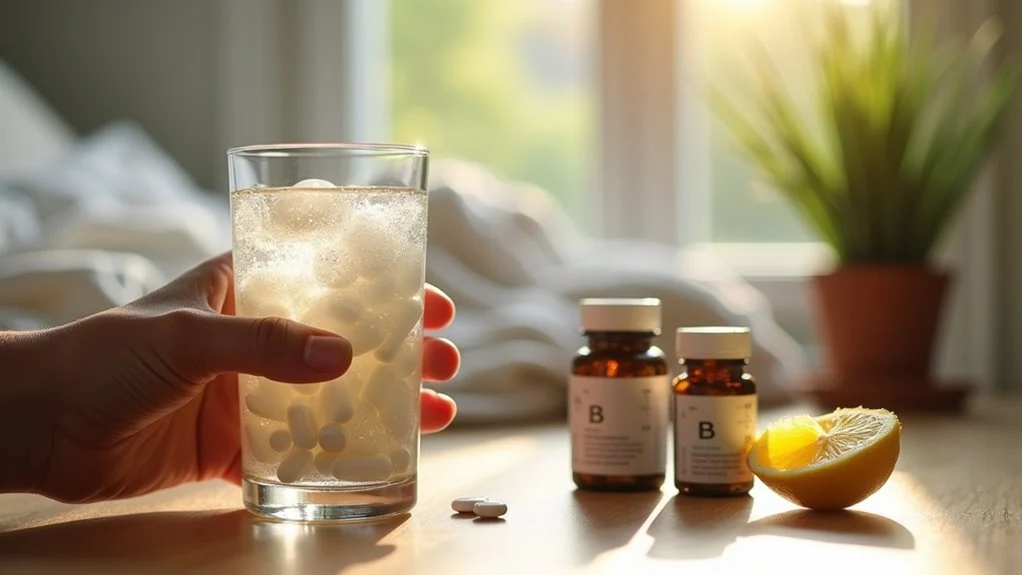
When alcohol depletes your body’s essential nutrients, magnesium and B vitamins become critical allies in your hangxiety recovery. These key nutrients support neurotransmitter production and help calm your nervous system, which alcohol consumption greatly disrupts.
- Magnesium benefits include muscle relaxation, nervous system regulation, and reduction of stress hormones – try magnesium glycinate supplements (200-400mg) or consume magnesium-rich foods like dark chocolate, avocados, and nuts.
- B vitamins, especially B1, B6, and B12, support brain function and energy metabolism – find them in whole grains, eggs, and leafy greens.
- Consider a B-complex supplement specifically formulated for recovery, which can help restore normal neurotransmitter function disrupted by alcohol.
Don’t expect instant results, but these supplements can greatly reduce recovery time and ease the mental distress of hangxiety.
Practice Mindfulness Meditation to Break Thought Spirals
When hangxiety sends your thoughts spiraling, mindfulness meditation can interrupt this cycle by focusing your attention on controlled breathing techniques. You’ll find relief by concentrating on the sensation of each breath entering and leaving your body, which naturally pulls your awareness into the present moment. Grounding yourself this way activates your parasympathetic nervous system, reducing stress hormones and creating mental space between you and anxiety-provoking thoughts.
Meditation Breathing Techniques
While your anxious mind races through worst-case scenarios, mindfulness meditation can serve as an effective anchor to the present moment. Specific breathing techniques can quickly interrupt the hangxiety cycle and restore calm to your nervous system.
Try these breathing exercises when hangxiety strikes:
- Box Breathing – Inhale for 4 counts, hold for 4, exhale for 4, hold for 4. Repeat this pattern while visualizing drawing a box with each breath.
- 4-7-8 Technique – Inhale through your nose for 4 counts, hold your breath for 7, then exhale completely through your mouth for 8 counts.
- Mindful breathing – Place one hand on your chest, the other on your abdomen. Breathe deeply so your abdomen rises, using visualization techniques to imagine tension leaving with each exhale.
Grounding Present Moment
Hangxiety often traps you in a loop of regret about the past and worry about the future, making present moment awareness particularly valuable for recovery. Practicing mindful awareness helps interrupt catastrophic thought patterns by anchoring your attention to what’s happening right now.
Try this sensory grounding technique: identify five things you can see, four things you can touch, three things you can hear, two things you can smell, and one thing you can taste. This simple exercise activates your prefrontal cortex, diminishing amygdala hyperactivity that fuels anxiety.
When intrusive thoughts arise, acknowledge them without judgment, then gently redirect your focus to your breath or physical sensations. With consistent practice, you’ll develop the ability to observe anxious thoughts rather than becoming consumed by them, considerably reducing hangxiety‘s grip.
Connect With a Supportive Friend or Family Member
Although you might feel tempted to isolate yourself during hangxiety, reaching out to a trusted friend or family member can provide immediate emotional relief. Sharing your feelings with someone who offers emotional support without judgment can help normalize your experience and reduce shame.
- Call or text someone who understands – Choose a person who practices active listening and won’t make you feel worse about your situation
- Be honest about what you’re experiencing – Naming your feelings often diminishes their power over you
- Accept comfort without self-criticism – Allow yourself to receive care rather than punishing yourself for needing support
Remember that connection is a powerful antidote to anxiety, and most people who care about you will appreciate your vulnerability rather than judge you for it.
Use Cognitive Reframing to Challenge Catastrophic Thinking
When hangxiety takes over, your mind often spirals into worst-case scenarios about what you said or did while drinking. This catastrophic thinking is a common cognitive distortion that intensifies your anxiety. To break this cycle, identify these exaggerated thought patterns when they emerge.
Ask yourself: “What’s the actual evidence for this belief?” and “What’s a more balanced interpretation?” For instance, replace “Everyone thinks I’m a mess” with “People were likely focused on their own enjoyment, not judging me.”
Write down these alternative perspectives. With practice, you’ll automatically challenge anxiety-producing thoughts rather than accepting them as truth. This cognitive reframing technique helps restore perspective when hangxiety has you convinced of social disasters that likely never happened.
Create a Sensory Comfort Environment With Light, Sound, and Scent
When you’re battling hangxiety, your sensory environment can either soothe or intensify your discomfort. Dimming harsh lights reduces visual stimulation while calming sounds like gentle nature tracks or white noise can help settle your racing thoughts. Aromatherapy with lavender, chamomile, or sandalwood can trigger relaxation responses, as scent therapy works directly on your brain’s limbic system to reduce anxiety symptoms.
Dim Lights, Calm Mind
After a night of drinking, your brain’s sensory processing can become hypersensitive, making everyday stimuli feel overwhelming. Creating a dim ambience can greatly reduce visual triggers that worsen hangxiety. Your nervous system needs this gentler environment to begin healing.
To create a serene atmosphere that supports recovery:
- Lower all light sources – Close blinds, use blackout curtains, or wear sunglasses indoors if necessary
- Use warm-toned lights – Switch to amber bulbs or night lights instead of harsh overhead lighting
- Eliminate screen time – The blue light from devices can increase stress hormones and disrupt your already compromised neurochemistry
This controlled sensory environment helps your brain reset and allows your overstimulated amygdala the fear center to calm down gradually.
Scent Therapy Works
Scent molecules have direct pathways to your brain’s emotional centers, making aromatherapy a powerful tool for reducing hangxiety. Calming scents like lavender, chamomile, and sandalwood can lower cortisol levels and ease your nervous system back to baseline. Try placing a few drops of these essential oils in a diffuser or on your pillow.
Certain scent combinations work synergistically for mood improvement bergamot paired with ylang-ylang creates a therapeutic fragrance that combats both anxiety and nausea. Your brain forms powerful scent associations, so consistent use of aromatic oils during recovery can train your brain to respond positively to these olfactory triggers. Consider creating a dedicated “recovery blend” that signals to your body it’s time to relax and heal. Always use high-quality oils for maximum benefit.
Frequently Asked Questions
How Long Does Hangxiety Typically Last?
Hangxiety typically lasts between 24-48 hours, but duration factors vary depending on your alcohol consumption, hydration levels, and individual biochemistry. You’ll likely experience peak symptoms the morning after drinking with gradual improvement over the day. Recovery strategies like hydration, rest, light exercise, and proper nutrition can greatly reduce this timeframe. If you’re experiencing hangxiety that persists beyond three days, it’s worth consulting a healthcare provider about your symptoms.
Can Certain Types of Alcohol Trigger Worse Hangxiety?
Yes, certain alcoholic beverages can worsen hangxiety. You’ll likely experience more intense anxiety symptoms from spirits anxiety, as higher alcohol content drinks like whiskey, vodka, and tequila can cause sharper blood alcohol fluctuations. Wine effects may also trigger hangxiety, especially with sulfites and histamines in red varieties. Your individual biochemistry plays a role too some people’s bodies process different alcohols distinctly. Tracking your reactions can help you identify your personal triggers and make informed choices for your wellbeing.
Are Some People Genetically Predisposed to Hangxiety?
Yes, you’re likely genetically predisposed to hangxiety if you notice it affecting you more severely than others. Genetic factors influence how your body metabolizes alcohol and regulates neurotransmitters during withdrawal. Your natural anxiety baseline and family history of anxiety disorders can amplify these effects. Some people inherit specific enzyme variations that create more severe anxiety triggers when alcohol leaves their system. Understanding your genetic predisposition can help you make informed choices about drinking that support your wellbeing.
Can Medications Worsen Hangxiety Symptoms?
Yes, medications can greatly worsen hangxiety symptoms. Your prescription drugs, especially antidepressants and anti-anxiety medications, can interact with alcohol, amplifying anxiety triggers when you’re hungover. Beta-blockers and stimulants often produce medication side effects that mirror hangxiety sensations. Furthermore, common over-the-counter medications containing caffeine or pseudoephedrine can heighten your nervous system’s reactivity during recovery. Always consult your doctor about potential interactions between your medications and alcohol consumption to protect your mental wellbeing.
Is Hangxiety a Sign of Alcohol Dependency or Addiction?
While hangxiety symptoms alone don’t definitively indicate addiction, they can be a warning sign to examine your relationship with alcohol. If you regularly experience intense anxiety after drinking or find yourself consuming alcohol despite these negative effects, it might suggest developing dependency. Your body is sending significant signals worth heeding. Consider tracking your alcohol consumption patterns and how they affect your mental health—this awareness is a powerful initial step in the direction of healthier choices.

Dr. Lord is a board-certified physician responsible for overseeing all medical detox protocols. He ensures that each client’s care meets ASAM 1.7 standards and is tailored to their unique medical needs.