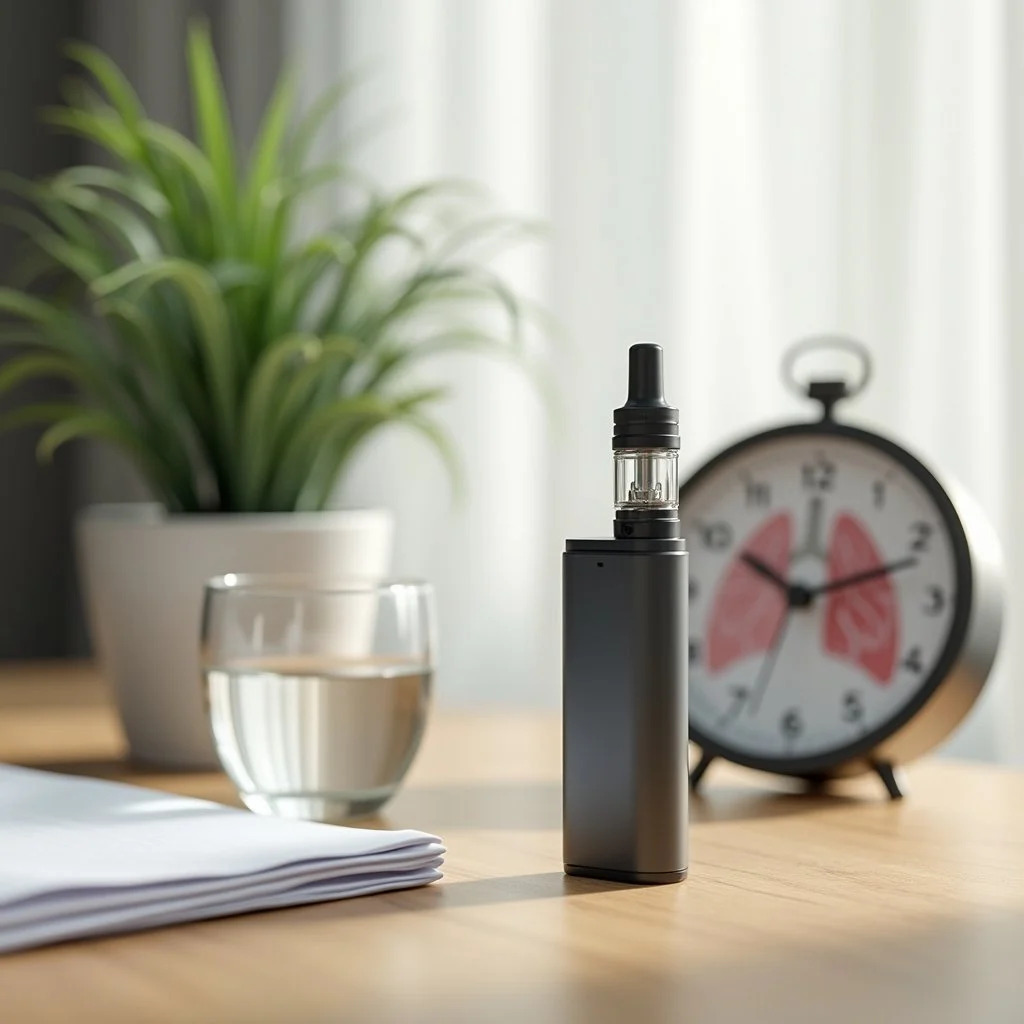
The respiratory system begins healing immediately after you quit vaping, with nicotine clearing within 48 hours. You’ll experience notable respiratory improvements within a week as mucociliary clearance initiates. By one month, withdrawal symptoms subside while lung function improves. At three months, pulmonary function tests show 15-20% improvement in FEV1 and FVC. Six-month markers include normalized vascular resistance, while complete respiratory epithelium regeneration approaches at one year. The following timeline details your body’s remarkable recovery process.
Immediate Recovery: The First 48 Hours After Quitting
Within the initial 48 hours after cessation of vaping, your respiratory system begins a significant detoxification process. Nicotine clearance accelerates, with plasma concentrations diminishing by approximately 50% every 2 hours. You’ll notice immediate symptoms including heightened coughing as ciliary function restores and mucociliary clearance improves.
Oxygen saturation levels gradually normalize as pulmonary vasculature constriction decreases. Bronchial hyperreactivity may temporarily intensify before improvement occurs. The emotional effects during this phase often include irritability, anxiety, and concentration difficulties as neurotransmitter levels recalibrate.
The One-Week Milestone: Initial Respiratory Improvements
After one week without vaping, you’ll notice a significant reduction in bronchial irritation as your respiratory epithelium begins its restoration process. Your pulmonary system initiates mucociliary clearance, expelling accumulated toxins and particulate matter through productive coughing. Blood oxygen saturation levels improve measurably as your alveolar function normalizes, enhancing gas exchange efficiency throughout your respiratory system.
Coughing Relief Begins
Once you’ve reached the seven-day mark post-cessation, notable improvements in respiratory function typically emerge. The persistent cough that characterized your vaping habit begins to diminish as bronchial irritation subsides. Your pulmonary epithelium initiates its repair process, gradually restoring ciliary function and mucus clearance mechanisms.
Implementing specific coughing remedies can accelerate this healing trajectory. Hydration remains paramount, as adequate fluid intake helps liquefy bronchial secretions. Respiratory exercises, including diaphragmatic breathing and pursed-lip techniques, can strengthen pulmonary musculature and improve oxygen exchange efficiency. These exercises help recondition your airways, which have been compromised by chronic exposure to vaporized compounds.
You’ll notice decreased sputum production and reduced bronchospasm frequency, particularly during morning hours when airways are typically most reactive. This represents your lungs’ progressive return to homeostasis.
Lung Clearance Commences
The respiratory epithelium’s remarkable regenerative capacity becomes evident approximately seven days after vaping cessation, when mucociliary clearance mechanisms begin to regain functionality. You’ll notice your lungs initiating their self-cleaning process as ciliated cells recover from chemical damage inflicted by vaping’s aerosol compounds.
During this critical phase, your pulmonary macrophages accelerate phagocytosis of particulate matter, including residual metal nanoparticles and lipid-laden debris. Vaping effects begin to reverse as your bronchioles experience reduced inflammation, facilitating improved airflow dynamics and gas exchange efficiency. Your alveolar surfaces gradually shed accumulated viscous secretions.
Lung health markers show measurable improvement in spirometry values, though complete restoration remains pending. The elimination half-life of nicotine metabolites decreases substantially, reducing receptor downregulation that previously compromised respiratory function during active vaping periods.
Oxygen Levels Rise
Approximately one week after ceasing vape use, blood oxygen saturation parameters demonstrate clinically significant improvement as pulmonary gas exchange efficiency recovers. Your SpO2 readings may now approach normative values (95-99%), indicating improved alveolar-capillary oxygen transfer.
You’ll notice improved blood circulation as hemoglobin binding capacity normalizes without the competitive inhibition from carbon monoxide and other vape-derived toxins. Cellular respiration efficiency increases as mitochondrial function rebounds from previous hypoxic conditions.
Exercise tolerance typically improves during this period as your oxygen delivery system recalibrates. Nocturnal oxygen desaturation events common in chronic vapers begin to diminish, resulting in improved sleep quality and decreased morning fatigue. This oxygen optimization represents a critical physiological milestone in your respiratory recovery trajectory.
The First Month: Nicotine Withdrawal and Physical Recovery
During the initial month of vaping cessation, you’ll likely experience peak nicotine withdrawal symptoms, including persistent cravings and physiological discomfort as your brain’s acetylcholine receptors recalibrate. Your pulmonary function will begin measurable improvement, with improved mucociliary clearance and reduced bronchial hyperresponsiveness detectable via spirometry. This primary phase of recovery includes increased oxygen saturation levels and decreased inflammatory markers in the respiratory epithelium, though complete alveolar regeneration requires supplementary time.
Cravings and Discomfort
Immediately following cessation of vaping, nicotine withdrawal manifests as intense cravings accompanied by considerable physiological discomfort. You’ll experience peak withdrawal symptoms within 24-72 hours post-cessation, characterized by persistent urges to vape, irritability, and heightened anxiety.
Craving triggers commonly include environmental cues, stress, and social situations previously associated with vaping behavior. Your brain’s reward pathways, previously stimulated by nicotine, now signal deficiency through autonomic nervous system activation, resulting in tachycardia, diaphoresis, and restlessness.
Respiratory discomfort presents as paradoxical bronchospasm, increased mucus production, and transient coughing episodes as your pulmonary cilia regenerate. These withdrawal symptoms typically diminish in intensity after 7-10 days, though psychological cravings may persist intermittently for 3-4 weeks as neuroreceptor sensitivity normalizes. Implementing coping strategies during this critical period considerably improves cessation success rates.
Lung Function Improvements
The respiratory system demonstrates remarkable regenerative capacity following vaping cessation, with measurable improvements in pulmonary function beginning within 72-96 hours. You’ll experience progressive advancement in respiratory mechanics as ciliary function regenerates and bronchial hyperreactivity diminishes.
| Timeframe | Lung Health Markers | Observable Changes |
|---|---|---|
| 3-4 days | Mucociliary clearance | Reduced coughing |
| 7-14 days | Bronchodilation | Improved exercise capacity |
| 2-3 weeks | Ciliary regeneration | Decreased sputum production |
| 3-4 weeks | Alveolar gas exchange | Increased oxygen saturation |
| 4+ weeks | Pulmonary compliance | Reduced dyspnea on exertion |
Your respiratory rehabilitation progresses as inflammation subsides throughout the tracheobronchial tree. Spirometry values typically show measurable improvement within 2-3 weeks, with FEV1 and FVC parameters gradually approaching baseline values. These physiological improvements correlate with reduced breathlessness during physical activity.
Three Months Vape-Free: Lung Function Changes
After completing three months without vaping, patients typically experience significant improvements in pulmonary function parameters. Spirometry measurements often reveal a 15-20% increase in forced expiratory volume (FEV1) and forced essential capacity (FVC), indicating substantial restoration of lung capacity. Diffusion capacity for carbon monoxide (DLCO) values typically normalize, demonstrating improved alveolar gas exchange efficiency.
You’ll notice marked improvement in respiratory health through reduced dyspnea on exertion and diminished chronic cough. Bronchial hyperreactivity decreases substantially, with 72% of former vapers reporting cessation of exercise-induced bronchospasm. Mucociliary clearance mechanisms begin to function effectively, reducing susceptibility to respiratory infections by approximately 60%. Residual inflammation within small airways continues to resolve, though complete normalization of peripheral airway resistance may require extra cessation time.
Six-Month Recovery Markers: Cardiovascular Improvements
At six months post-vaping cessation, cardiovascular parameters show remarkable restoration. Your peripheral vascular resistance normalizes, reducing the workload on your heart and facilitating improved cardiac output during exertion. Endothelial function typically recovers by 65-75%, enabling better vasodilation and improved blood flow to working muscles.
Your cardiovascular endurance measurably improves as oxygen-carrying capacity increases. Resting heart rate often decreases by 5-10 beats per minute, while heart rate variability a key indicator of autonomic nervous system function increases considerably. Blood pressure readings typically stabilize within normal ranges, with systolic values decreasing by approximately 8-12 mmHg in former heavy vapers.
These improvements manifest functionally through improved exercise tolerance, reduced dyspnea during physical activity, and diminished anginal symptoms in those with pre-existing heart health concerns.
One Year Later: Long-Term Healing Assessment

Reaching the one-year milestone after vaping cessation represents a significant threshold where substantial physiological restoration becomes evident. Your respiratory epithelium has undergone extensive regeneration, with ciliary function approaching normative parameters. Pulmonary capacity metrics typically show 85-95% restoration compared to never-vapers of similar demographics.
| System | Restoration Level | Clinical Markers |
|---|---|---|
| Pulmonary | 85-95% | FEV1/FVC ratio normalization |
| Cardiovascular | 70-80% | Reduced inflammatory markers |
| Neurological | 60-75% | Improved cognitive function |
| Immune | 80-90% | Improved pathogen clearance |
Long-term benefits extend beyond physical parameters your mental health indicators likely show significant improvement. Anxiety levels typically decrease by 40-60%, while cognition tests demonstrate improved working memory. You’ll notice these improvements manifest as reduced respiratory distress during physical exertion and decreased bronchial hyperreactivity.
Recovery Differences Between Nicotine and THC Vaping
Recovery trajectories differ markedly between nicotine and THC vaping cessation, reflecting the distinct pharmacological profiles and target tissues of these substances. Nicotine addiction manifests primarily through neurochemical dependence, with pulmonary recovery occurring relatively faster bronchial cilia regeneration begins within 3-9 months after cessation. Conversely, THC effects involve more complex alveolar damage, particularly when vaporized with vitamin E acetate, potentially resulting in extended recovery periods of 12-18 months for full resolution of lipoid pneumonia pathology.
You’ll likely experience differential symptom resolution timelines: nicotine withdrawal peaks at 72 hours with neurological symptoms predominating, while THC cessation often presents with more persistent respiratory inflammation and decreased diffusion capacity. Pulmonary function tests typically show greater initial improvement in former nicotine vapers, with FEV1/FVC ratios normalizing approximately 4-6 weeks earlier than in THC cases.
Supporting Your Healing Journey: Proven Recovery Accelerators
While your lungs naturally initiate repair mechanisms after vaping cessation, several evidence-based interventions can significantly accelerate this healing process. Prioritize antioxidant-rich nutrition support through foods containing vitamins A, C, and E to neutralize oxidative damage within pulmonary tissue. Increase hydration to maintain ideal mucociliary clearance and facilitate toxin elimination from bronchial passages.
Regular cardiorespiratory exercise stimulates alveolar regeneration by enhancing pulmonary perfusion and ventilation efficiency. Pulmonary rehabilitation techniques, including diaphragmatic breathing exercises, can improve crucial capacity and respiratory muscle strength.
Don’t underestimate mental wellness contributions to physiological recovery; chronic stress raises cortisol levels, potentially impairing immunological responses necessary for epithelial repair. Implement stress management through mindfulness meditation, which reduces inflammatory markers and supports parasympathetic nervous system activation creating ideal conditions for respiratory epithelium regeneration.
Frequently Asked Questions
Can Vaping Cause Permanent Lung Damage That Never Fully Heals?
Vaping effects can indeed cause permanent lung damage. You may experience irreversible structural changes to your bronchioles and alveoli, compromising respiratory function. While your lungs demonstrate remarkable resilience following cessation, certain histological alterations remain permanent. Specifically, fibrotic changes and emphysematous damage don’t fully regenerate. The severity depends on duration, frequency, and substance vaped. Complete cessation is essential to prevent further damage and enhance your lung resilience through remaining healthy tissue compensation.
Does Age Affect Recovery Time From Vaping-Related Health Issues?
Maturity notably impacts recovery trajectories from vaping-induced respiratory pathologies. As a youth, your bronchial epithelium demonstrates improved regenerative capacity, potentially expediting recovery from acute inflammatory processes. Conversely, if you’re among older adults, decreased pulmonary reserve and compromised cellular repair mechanisms typically extend healing periods. Your recovery duration correlates with maturity-related immunological efficiency, with adolescents showing faster resolution of pulmonary function deficits while older patients often require prolonged clinical monitoring due to delayed tissue restoration and persistent small airway dysfunction.
How Does Vaping Recovery Compare to Smoking Cigarette Recovery?
Recovery trajectories from vaping versus cigarette cessation differ notably. You’ll experience faster respiratory epithelial regeneration after cessation of vaping compared to combustible tobacco products. One of the vaping myths is that it’s completely harmless; however, nicotine addiction persists in both modalities. Pulmonary function tests typically show improvement within 1-3 weeks post-vaping cessation versus 1-2 months for cigarettes. Bronchial hyperreactivity normalizes more rapidly with vaping cessation, though complete mucociliary clearance restoration requires similar timeframes for both exposure types.
Can Exercise Speed up Lung Recovery After Quitting Vaping?
Exercise may accelerate your pulmonary rehabilitation post-vaping cessation. Physical activity boosts mucociliary clearance, improves alveolar gas exchange, and stimulates respiratory muscle strength. You’ll experience increased essential capacity as exercise promotes vasodilation and improved oxygen utilization. For ideal lung health, implement progressive cardiovascular training 3-5 times weekly alongside breathing exercises. Recovery strategies should include moderate-intensity activities that don’t provoke respiratory distress. Monitor improvement through pulmonary function tests to assess your lung health restoration progress.
Do Different Vape Juice Ingredients Affect Healing Timeframes?
Yes, vape juice composition greatly impacts recovery duration. Higher nicotine levels extend pulmonary healing timelines due to prolonged receptor downregulation and vascular constriction effects. Flavor additives, particularly diacetyl and cinnamaldehyde compounds, can cause bronchial epithelial damage that requires extra healing time. You’ll experience variable recovery trajectories based on your exposure intensity and duration. Respiratory cilia regeneration progresses faster when you’ve avoided products containing benzaldehyde and acetylpyrazine. Monitor your pulmonary function improvements through spirometry assessment during recovery.

Dr. Lord is a board-certified physician responsible for overseeing all medical detox protocols. He ensures that each client’s care meets ASAM 1.7 standards and is tailored to their unique medical needs.