
Recent studies have uncovered shocking truths about vaping addiction. You’ll face 2.5 times higher addiction risk if you spend 7+ hours daily on social media, while sweet flavors create multiple layers of chemical dependency beyond nicotine. E-cigarette companies now design stealth devices disguised as everyday items, and rural areas show considerably higher usage rates. The gender gap is narrowing, with both men and women increasingly affected. These findings only scratch the surface of today’s complex vaping epidemic.
The Rising Epidemic: Startling Youth Vaping Statistics

While youth vaping rates have declined markedly in recent years, the statistics remain concerning. You’ll find that 1.63 million U.S. middle and high school students currently use e-cigarettes, representing 5.9% of this population in 2024. Though this reflects a significant 70% drop since 2019’s peak of 27.5%, the long-term health impacts remain unclear.
What’s particularly striking is how behavioral intervention strategies, like FDA’s “The Real Cost” campaign, have prevented over 444,000 new users between 2023-2024. Yet challenges persist one in six young adults aged 21-24 still vapes, and those who do are 3.6 times more likely to progress to traditional cigarettes. Nearly 85% of youth vapers choose flavored e-cigarettes, making these products particularly appealing to younger demographics. These patterns suggest that while prevention efforts are working, continued vigilance is essential to protect youth from nicotine addiction.
Behind the Flavors: Why Quitting Is Harder Than Expected
Although many assume flavor varieties simply make vaping more enjoyable, scientific evidence reveals they’re a critical factor in reinforcing nicotine addiction. Your personalized addiction risks increase dramatically when flavors mask nicotine’s harshness while simultaneously triggering dopamine release in your brain’s reward center.
You’ll find quitting particularly challenging because sweet and fruit flavors create multiple layers of dependency. Research shows these flavors don’t just hide the unpleasant aspects of nicotine – they actively amplify its addictive properties through specific chemical interactions. For instance, farnesol, found in fruit flavors, increases dopamine neuron activity, while menthol prolongs nicotine’s effects. Over three quarters of adolescents gravitate toward sweet fruit flavored e-cigarettes, making this demographic especially vulnerable to addiction. Among high school students, 20.8 percent reported using e-cigarettes within a recent 30-day period. The e-cigarette market has seen massive growth, with unique products increasing from 453 to over 2,000 in just one year.
Social normalization factors compound these challenges, as flavor variety fosters peer acceptance and perceived safety, especially among 18-24-year-olds. These combined mechanisms make flavor-based vaping significantly more difficult to quit than previously understood.
The Hidden Link Between Social Media and Vaping Addiction

Beyond flavor addiction, social media emerges as a powerful catalyst in the vaping epidemic. Social media algorithms and brand marketing techniques create a perfect storm that drives youth adoption of e-cigarettes.
Research shows that teens who spend 7+ hours daily on platforms face 2.5 times higher risk of becoming dual users of both traditional cigarettes and vapes. Users spending 7+ hours daily on social media platforms demonstrate a nearly five-fold increase in likelihood of engaging in both smoking and vaping behaviors. Manufacturers have developed stealth devices that look like everyday items to help users vape discreetly. Among young people aged 10-25 years, current e-cigarette use was reported by 2.5% of participants.
- You’re 2-3x more likely to start vaping if exposed to tobacco content on Instagram or TikTok
- Snapchat users show 2.8x higher risk of experimental vaping compared to non-users
- 73.5% of young social media users encountered e-cigarette content in 2021
- Vape companies exploit influencer partnerships to bypass period restrictions
- Repeated exposure normalizes vaping through peer validation and lifestyle marketing
These findings reveal how digital platforms systematically shape addiction patterns among vulnerable youth populations.
Breaking Down Regional Hot Spots: Where Vaping Surges Most
State-level data reveals Oklahoma and Kentucky as leading hot spots for vaping addiction, with Kentucky’s Gen Z daily use reaching an alarming 17.9%.
You’ll find stark contrasts between urban centers like Washington, D.C., which report lower vaping rates, and rural Southern communities where both access to vaping products and usage rates remain considerably higher. The regional disparities extend beyond simple geography, as economic factors and limited public health infrastructure in rural areas create conditions that sustain elevated vaping prevalence, particularly among younger populations. These areas have become prime targets for e-cigarette companies, with aggressive marketing campaigns specifically designed to appeal to youth.
State-Level Usage Patterns
Recent data reveals stark geographical disparities in e-cigarette usage across the United States, with Oklahoma, Hawaii, Arkansas, Colorado, and Florida emerging as the nation’s highest-use regions in 2018. Analysis shows taxation policy implications vary dramatically, with Maryland and DC implementing aggressive measures while states like Wyoming maintain lax oversight, directly impacting dual use e-cigarette trends.
Oklahoma and Wyoming’s weak regulations correlate with concerning youth vaping rates. Maryland’s $5.00 per pack tax represents a decisive step in curbing dual-use behaviors. District of Columbia leads with the nation’s strictest taxation and comprehensive bans. The state requires all sellers to obtain retail licenses for e-cigarette sales. With 9.8% daily vapers, Oklahoma maintains the highest adult vaping rate in the country while spending over four times the national average on cessation programs.
Rural states show persistently higher usage despite national prevention efforts. States receiving “F” grades in tobacco control (63%) demonstrate regulatory gaps.
These patterns highlight the pivotal role of state-level policies in addressing the vaping epidemic, particularly in high-use regions.
Hidden Demographic Hotspots
Demographic patterns reveal complex vaping hotspots that extend far beyond basic geographical boundaries. You’ll find notable gender-specific patterns worldwide, with men typically vaping at higher rates – for instance, Australian men vape at nearly double the rate of women (2.9% vs 1.6%). However, these gaps are narrowing as marketing becomes more inclusive. The rise of Elfbar and BC5000 brands has significantly influenced these demographic patterns. The United Kingdom has emerged as a significant market with 8.3% of its population actively vaping. Young adults aged represent the largest vaping demographic globally.
Age-related hotspots show striking concentrations among younger demographics, with 18-24 year-olds in multiple regions showing considerably higher usage rates. In Australia, this age group vapes at nearly twice the national average. Socioeconomic disparities also influence vaping adoption, particularly evident in New Zealand where Māori populations have experienced substantial shifts from traditional smoking to vaping.
The U.S. maintains its position as the global leader with 11% adult prevalence, while Asia-Pacific markets demonstrate rapid growth, especially in China and Japan.
Urban Vs Rural Divide
Consistently growing data reveals a stark urban-rural divide in vaping behaviors across the United States, with rural youth maintaining considerably higher e-cigarette use rates compared to their urban peers. This divide stems from regulatory enforcement disparities and uneven community healthcare resources.
Rural youth e-cigarette use stands at 34.4% versus 22.2% in urban areas (2024)
Nicotine pouch adoption is nearly four times higher in rural communities
Limited access to cessation programs puts rural populations at greater risk
Rural areas show faster adoption of newer nicotine products despite fewer resources
Healthcare infrastructure gaps widen the treatment disparity between regions
These regional differences demand targeted interventions, as rural communities face unique challenges in combating vaping addiction. The data suggests that addressing these disparities requires customized approaches that account for each region’s distinct healthcare access, enforcement capabilities, and cessation resource availability. Research shows that rural residents tend to place higher trust in religious organizations and leaders when seeking information about e-cigarette use and safety.
Mental Health and Nicotine: The Psychological Trap
Your brain’s chemistry dramatically shifts when you’re caught in nicotine’s grip, as the substance hijacks natural reward pathways and creates persistent dependency cycles that worsen anxiety and depression.
When you vape to cope with stress, you’re actually strengthening the connection between emotional triggers and nicotine use, making it harder to break free from the addiction pattern.
Research shows that over 50% of e-cigarette users experience mental health challenges, suggesting that nicotine dependency and psychological distress form a self-reinforcing trap that requires both chemical and emotional strategies to overcome. The addictive nature of vaping is intensified by how quickly nicotine reaches brain, producing nearly instant effects that reinforce the behavior.
Brain Chemistry Behind Cravings
The intricate relationship between nicotine and brain chemistry creates a powerful psychological trap that makes vaping particularly addictive. When you vape, nicotine triggers dopamine reward pathways, fundamentally altering your brain’s natural reward system. This process involves complex interactions between neurotransmitters and receptors, leading to persistent cravings and withdrawal symptoms.
Your brain’s pleasure centers become rewired, making it increasingly difficult to feel satisfaction from normal activities. Dopamine surges from vaping create a false sense of reward that your brain begins to prioritize. Nicotine withdrawal symptoms intensify as your brain adapts to require higher doses. Critical decision-making areas of your brain show altered activity, making it harder to quit. Structural changes in your reward circuits persist long after your last vape, sustaining cravings.
Breaking Addiction’s Mental Grip
Mental health conditions and nicotine addiction form a dangerous alliance that amplifies both challenges. If you’re struggling with both issues, you’re not alone the data shows that 35% of smokers have behavioral health disorders, consuming 38% of all U.S. adult nicotine products.
The relationship is strikingly clear: you’re twice as likely to develop nicotine dependence if you have a mental health condition, with rates soaring to 90% for those with schizophrenia and 83% for bipolar disorder. This connection demands dual diagnosis treatment, as standard approaches often fall short.
The cycle is self-reinforcing nicotine use worsens anxiety, depression, and PTSD symptoms, while these conditions make quitting more difficult. Breaking free requires customized cessation approaches that address both the addiction and underlying mental health challenges simultaneously.
Stress-Vaping Connection Pattern
Understanding vaping’s psychological impact reveals a complex stress-anxiety cycle that grips users in multiple ways. You’ll find yourself caught between temporary relief and intensifying stress levels, as vaping becomes your primary coping mechanism while simultaneously deteriorating your mental well-being.
Your stress temporarily subsides when vaping, creating a false sense of control. Without nicotine, your anxiety spikes dramatically, pushing you back to vaping. Social pressures and withdrawal symptoms compound your stress levels. You’re less likely to develop healthy coping mechanisms or mindfulness techniques. Your brain becomes rewired to associate stress relief exclusively with vaping.
Research shows this cycle perpetuates dependency, making it increasingly difficult to break free. The relationship between stress and vaping creates a self-reinforcing loop that requires professional intervention and alternative stress management strategies to overcome.
The Evolving Face of E-cigarette Technology and Addiction
Modern e-cigarette technology has undergone rapid transformation, integrating sophisticated AI systems and sustainable engineering to reshape the landscape of nicotine consumption. Advanced heating mechanisms now utilize graphene coils for superior performance, while synthetic nicotine developments offer purer formulations with augmented flavor stability.
| Feature | Impact |
|---|---|
| AI Monitoring | Tracks usage patterns and suggests reduction plans |
| Solar Power | Extends battery life and reduces carbon footprint |
| Smart Apps | Enables precise control of vaping parameters |
You’ll find these devices now incorporate predictive algorithms that analyze your vaping habits, automatically adjusting power settings to optimize your experience. The integration of biodegradable materials and zero-carbon manufacturing processes demonstrates the industry’s shift in the direction of environmental consciousness, while real-time monitoring systems provide unprecedented control over nicotine intake through sophisticated mobile interfaces.
Beyond Marketing: How Peer Pressure Drives Vaping Dependence
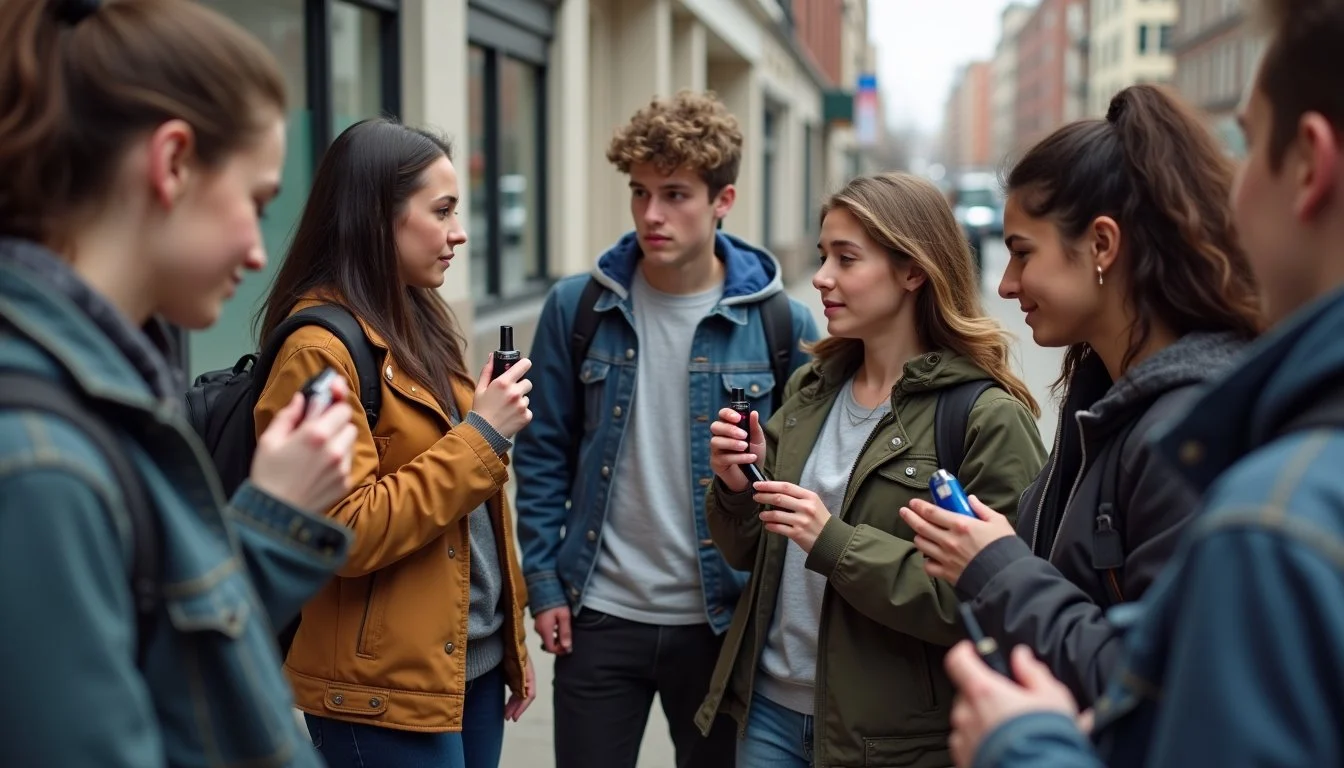
While technological advancements shape the e-cigarette terrain, peer influence emerges as the dominant force behind vaping adoption and dependence. The significance of peer influence manifests through staggering statistics: you’re five times more likely to vape if your companions do, and 60% of teens get their initial vaping products from peers.
Peer networks dramatically amplify vaping behavior, with companion use increasing adoption fivefold and driving most teen access to e-cigarettes.
Cultural normalization dynamics intensify through:
- Your social network’s vaping habits double your likelihood of initiation
- Urban environments amplify peer pressure effects compared to rural settings
- Social media exposure intertwines with friend influence, increasing access
- High-income households show stronger peer-influence patterns
- School environments contribute to rapid adoption rates
The data reveals a complex web of social factors driving vaping dependence, where friend selection and network dynamics create self-reinforcing cycles of use, particularly among teens under 14.
Frequently Asked Questions
Can Vaping Affect Fertility and Reproductive Health in Young Adults?
Yes, vaping can considerably impact your fertility and reproductive health. Research shows it causes hormonal disruption in both men and women, reducing ovarian reserves through decreased AMH levels in females and altering sperm morphology in males.
You’ll face risks of sexual dysfunction and reduced fertility potential, even with nicotine-free vapes. The toxic components in e-liquids damage reproductive tissues, and these effects are particularly concerning if you’re a young adult during peak reproductive years.
How Long Does Nicotine Withdrawal From Vaping Typically Last?
You’ll typically experience nicotine withdrawal from vaping for 2-4 weeks, though your timeline may vary based on your usage patterns. Preliminary symptoms begin within hours of your last vape, peak around days 3-5, and gradually diminish.
While physical symptoms like headaches often resolve within the initial week, you might face psychological challenges for several weeks. Long-term health impacts improve once you’ve completed withdrawal, but cravings can persist beyond 5 weeks.
Do Different Vaping Devices Deliver Varying Levels of Nicotine Absorption?
Yes, your nicotine absorption levels vary considerably based on device design factors. Advanced e-cigarettes and variable voltage tanks deliver higher nicotine concentration levels than early-generation “cig-a-like” devices.
You’ll get quicker absorption through advanced devices due to their improved vaporization efficiency and customizable settings. While initial-gen devices rely on slower buccal absorption, newer pod systems and mods offer more efficient pulmonary delivery, leading to higher plasma nicotine peaks.
What Percentage of Former Smokers Become Dual Users With E-Cigarettes?
Based on available data, you’ll find that a significant portion of smokers experiment with e-cigarettes, leading to dual use patterns. Research shows that 59% of e-cigarette users were current smokers in 2015, with 96% of dual users having smoked before vaping.
When examining smoking cessation outcomes, about 48.8% maintain dual use after one year, while 43.9% return to smoking-only, and just 5.9% shift completely to vaping.
How Does Altitude or Climate Affect E-Cigarette Device Performance?
When you’re high altitude vaping, you’ll notice significant changes in device performance. Your e-cigarette’s battery depletes faster due to lower oxygen levels, while cold temperatures reduce battery capacity.
Regional weather patterns affect vapor production you’ll experience thinner vapor clouds in high-altitude’s dry air. You’ll also need more frequent battery recharging, and your e-liquid may vaporize differently due to atmospheric pressure changes.
Consider adjusting your wattage settings to compensate for these environmental effects.

Dr. Lord is a board-certified physician responsible for overseeing all medical detox protocols. He ensures that each client’s care meets ASAM 1.7 standards and is tailored to their unique medical needs.